Light-coloured flooring has a strong appeal. It makes rooms feel brighter, cleaner, and more spacious almost instantly. Scroll through any home inspiration site and you’ll see pale floors everywhere — airy living rooms, calm bedrooms, minimalist kitchens. It’s no surprise so many people gravitate towards them.
But this is also where a lot of homeowners make mistakes. Light floors can look incredible, but only when they’re chosen with the right expectations and a bit of practical thinking. Without that, what seemed like a safe, stylish choice can quickly become a daily frustration.
One of the biggest misconceptions is assuming all light-coloured flooring behaves the same. Materials, finishes, textures, and even installation choices make a huge difference. This is where options like GatherCo travertine tiles often come up in conversations about balancing appearance with long-term practicality — not because of branding, but because the material itself behaves very differently from many common alternatives.
Mistake #1: Assuming Light Floors Are Always High Maintenance
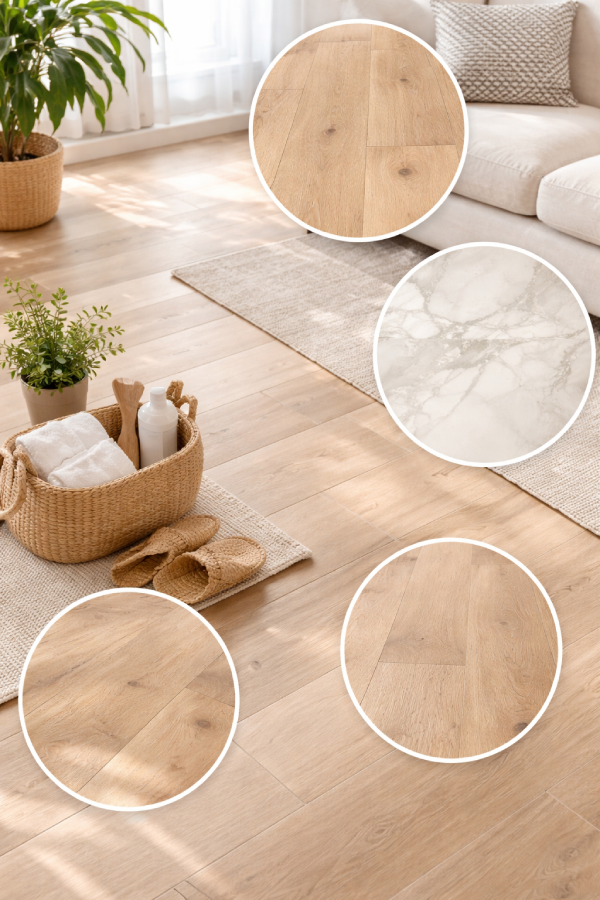
A lot of people avoid light floors entirely because they believe they’ll constantly show dirt, dust, and marks. Others go the opposite way and choose them without thinking about how they’ll actually age.
The truth sits somewhere in between.
What matters most isn’t the colour alone, but:
- The surface texture
- The finish (polished, honed, matte)
- The pattern or variation in the material
Highly polished, uniform surfaces tend to show every footprint and smudge. Light floors with subtle variation or natural texture often hide everyday mess far better than expected. Small imperfections and colour shifts work in your favour, rather than against you.
Mistake #2: Prioritising Colour Over Material
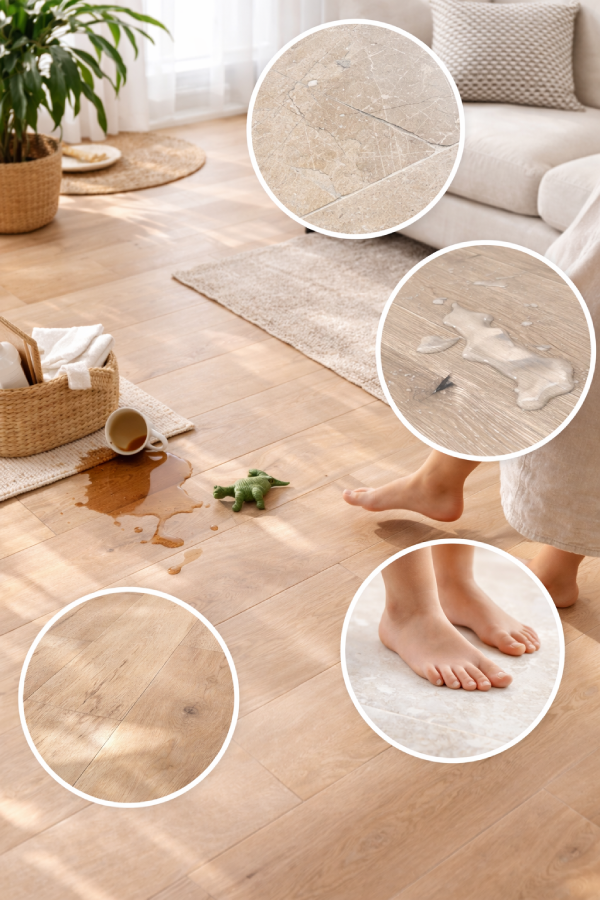
Many people start and end their decision with a colour swatch. If it’s light and matches the walls, it feels like a win. But flooring isn’t paint — you live on it, walk on it, spill on it.
Different materials behave very differently under daily use:
- Some scratch easily
- Some react badly to moisture
- Some feel cold and harsh underfoot
- Others soften over time and develop character
Choosing a light colour in the wrong material can lead to regret. The smarter approach is to decide how the space will actually be used first, then choose a light tone within a material that supports that lifestyle.
Mistake #3: Forgetting How Light Changes a Space
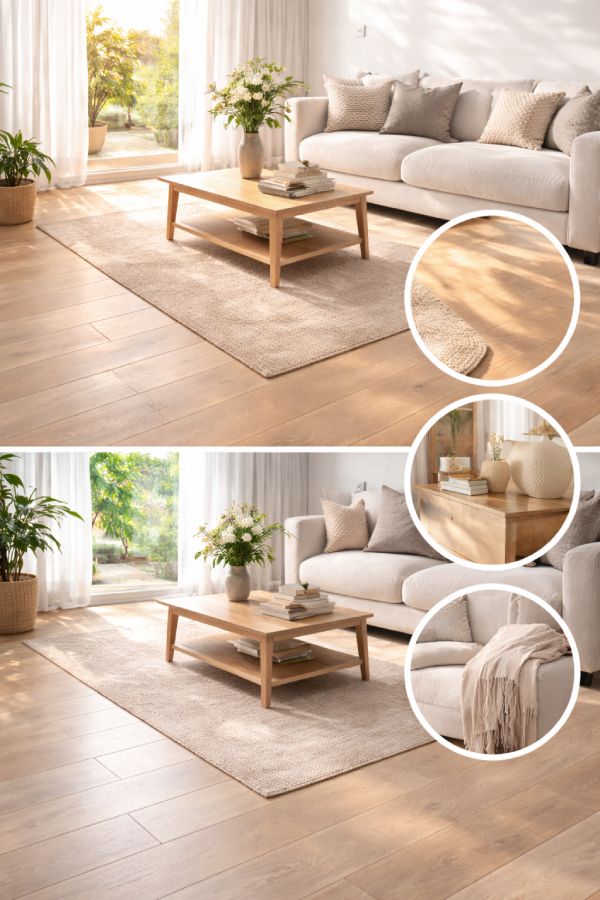
Light floors don’t just reflect light — they change how a room feels at different times of day.
In bright spaces, they can enhance openness and calm. In rooms with limited natural light, they can sometimes feel flat or washed out if there’s no contrast elsewhere. Furniture, rugs, and wall finishes all play a role in preventing a room from feeling unfinished or sterile.
Before committing, it helps to ask:
- Does this room get morning or afternoon light?
- Will there be enough contrast from furniture or fixtures?
- Is warmth coming from other elements like timber, fabric, or stone?
Light floors work best when they’re part of a considered palette, not the only design feature doing the heavy lifting.
Mistake #4: Overlooking Long-Term Wear
Brand-new light flooring often looks perfect. Five years later is the real test.
Some materials:
- Yellow over time
- Lose their original tone
- Show wear unevenly
- Become harder to repair or refresh
Natural materials often age more gracefully because wear looks intentional rather than accidental. Instead of trying to preserve a “brand new” look forever, it’s usually better to choose something that looks good as it changes.
This mindset shift alone can save a lot of disappointment.
Mistake #5: Ignoring Comfort Underfoot
Light floors are often associated with visual comfort, but physical comfort gets overlooked.
Hard, cold surfaces can make a home feel less inviting, especially in spaces where people spend a lot of time standing or walking barefoot. The solution isn’t always underfloor heating or rugs everywhere — sometimes it’s choosing a material that naturally feels more forgiving and balanced.
Texture, thermal properties, and how a surface interacts with the surrounding environment all matter more than most people expect.
How to Make a Smarter Choice
If you’re considering light-coloured flooring, a few practical checks can make all the difference:
- View samples in your own space, not just in a showroom
- Ask how the material ages, not just how it looks new
- Think about daily habits, not idealised lifestyles
- Choose variation over perfection when possible
Light flooring doesn’t need to be risky. It just needs to be chosen with intention rather than assumption.
When people slow down and look beyond colour alone, light floors often become one of the most versatile and enduring design choices in a home. They can elevate a space, adapt over time, and support everyday living — without the stress many people expect.
The key isn’t avoiding light-coloured flooring altogether. It’s understanding what you’re really choosing, and why.