Some of the links on this website are affiliate links. This means that if you click through and make a purchase, we may earn a small commission at no extra cost to you. Your support helps us keep Style Your Sanctuary free, allowing us to continue sharing home inspiration, decorating advice, and helpful guides. Affiliate programs we work with include Amazon Associates, Awin and Partnerize.
Photo by Lotus Design N Print on Unsplash
Some homes create an immediate impression of luxury even though none of the individual pieces would be particularly expensive to replace. The sofa may be ordinary, the artwork inexpensive, and the dining table several years old, yet the entire space somehow feels polished and carefully designed.
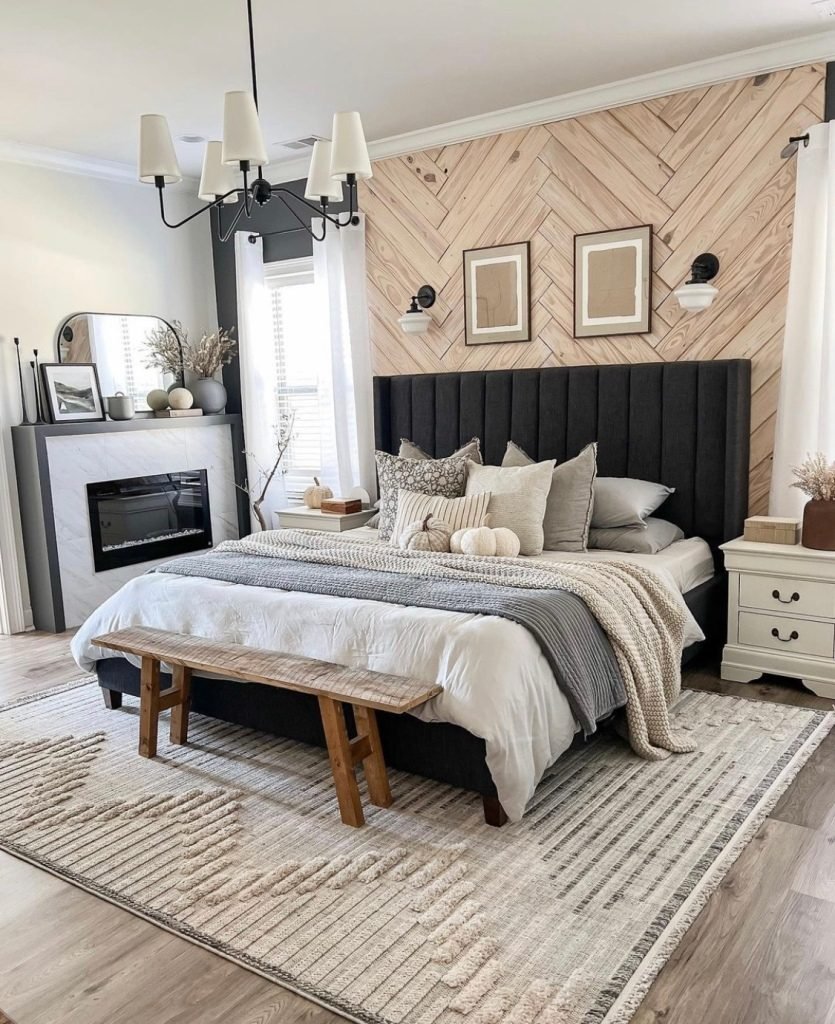
That effect usually comes from composition rather than price. When proportions work, colors relate to one another, lighting creates depth, and unnecessary objects are removed, inexpensive pieces can look intentional. The opposite is also true: filling a room with costly furniture does not guarantee that the finished space will look expensive.
Expensive-Looking Rooms Usually Have a Clear Visual Order
Walk into a well-designed room and your eyes normally know where to go. There may be one substantial piece of artwork, an attractive window, a large sofa, or another obvious focal point. Everything else supports it rather than competing for equal attention. That principle resembles the value of structured analysis in a completely different field. An investment platform such as https://www.vectorvest.com/ brings different pieces of market information into an organized framework, while a successful interior creates its own visual framework by making separate objects work as one coherent composition.
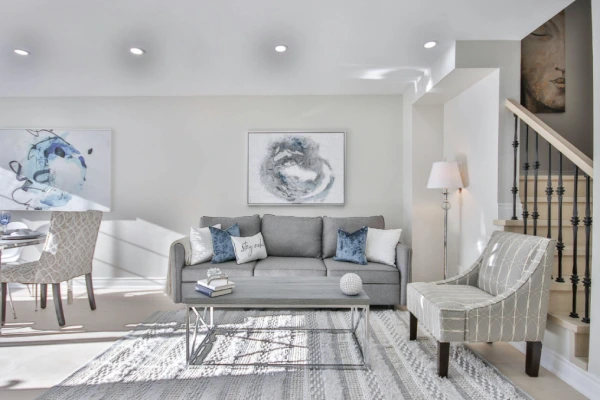
Scale plays a major role in creating that effect. A tiny rug beneath substantial furniture can make an otherwise attractive room appear disconnected, while artwork that is much too small for a large wall may look accidental. Furniture also needs to relate properly to the dimensions of the space. A large sectional squeezed into a small living room can make everything feel cramped, while several undersized pieces in a large room may make the space appear unfinished. Sometimes removing a few small decorations and giving greater visual importance to one appropriately sized object produces a more luxurious result without increasing the budget at all.
Good Lighting Can Make Ordinary Furniture Look Considerably Better
Lighting affects almost everything people notice about an interior, including color, texture, shadows, and the apparent depth of a room. A space filled with inexpensive furniture can look warm and sophisticated under thoughtful lighting, while expensive pieces can appear surprisingly flat beneath one harsh ceiling fixture.
Homes that feel polished usually have more than one source of light. A floor lamp near a chair, a table lamp on a console, practical lighting where tasks happen, and softer illumination elsewhere allow different parts of the room to have their own visual character. This also means the atmosphere can change according to the time of day. Bright general lighting may be useful while cleaning or working, while softer lamps can make the same space more inviting during dinner or later in the evening.
Natural light deserves the same attention. Curtains positioned to emphasize the height and width of a window can make both the window and the surrounding wall appear more substantial. Heavy furniture that unnecessarily blocks daylight may have the opposite effect. None of these improvements requires expensive designer fixtures. The placement, intensity, and combination of light sources can matter considerably more than the amount spent on them.
Repeating Materials and Colors Makes a Room Feel Deliberate
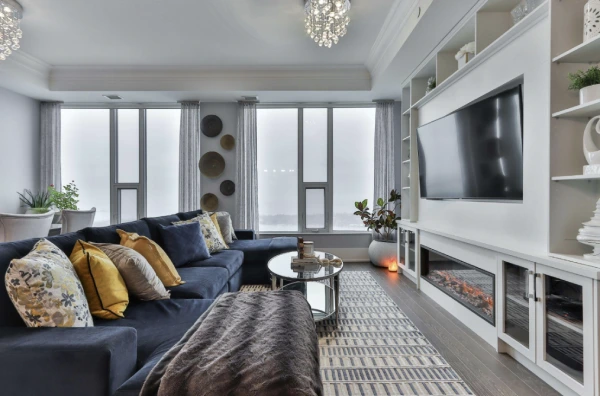
Photo by Lotus Design N Print on Unsplash
One reason professionally styled rooms often appear expensive is that individual objects seem related even when they were purchased separately. A wood tone introduced by one piece of furniture may appear again elsewhere, while a metal used in a lamp could be repeated subtly in frames or hardware. The repetition gives the eye something familiar to recognize as it moves through the space.
Problems often begin when every purchase is treated independently. One table introduces a particular wood tone, another brings in a completely unrelated finish, several metals compete through lamps and furniture, and decorative accessories introduce numerous additional colors. None of those pieces may be unattractive individually, but together they can make the room feel accidental.
This does not mean everything should match. Rooms where the coffee table, television unit, side tables, and shelves all come from exactly the same furniture collection can sometimes feel more like a showroom than a home. Repetition works better than duplication. Choose a few materials, colors, or shapes and allow them to appear in different ways throughout the room. Texture can then provide variety without creating visual confusion. Wood, linen, wool, glass, ceramics, and other contrasting surfaces can make even a restrained palette feel layered and substantial.
Empty Space Often Looks More Luxurious Than Extra Decoration
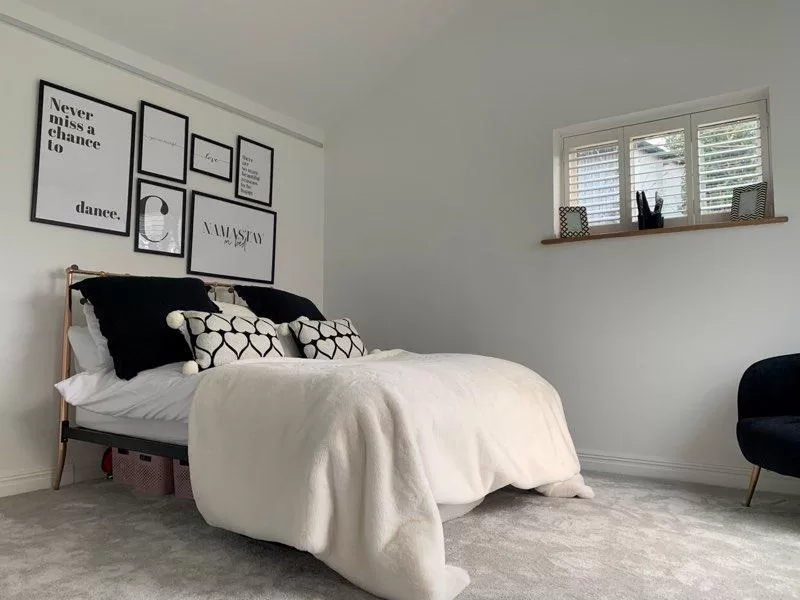
When a room feels unfinished, buying something else can seem like the obvious solution. Another vase goes on the console, several cushions appear on the sofa, and an empty section of wall receives a collection of small decorations. Yet many expensive-looking interiors succeed because they know where to stop.
Empty space gives important objects room to have an impact. A console containing two or three deliberately positioned items can appear more polished than the same surface covered with decorations. Shelves do not need something occupying every available section, and every wall does not require artwork simply because there is room for it.
Everyday clutter has an even greater effect than decoration. Charging cables, packaging, paperwork, remote controls, toiletries, kitchen appliances, children’s belongings, and miscellaneous objects can gradually take over surfaces. Creating practical places for these items can transform a room without purchasing anything decorative. This does not require making the home minimalist or removing the objects that give it personality. Books, photographs, souvenirs, and meaningful belongings can make an interior much more interesting. The important difference is whether the room looks intentionally lived in or simply filled with whatever accumulated there.
Small Details Can Make Inexpensive Pieces Feel More Considered
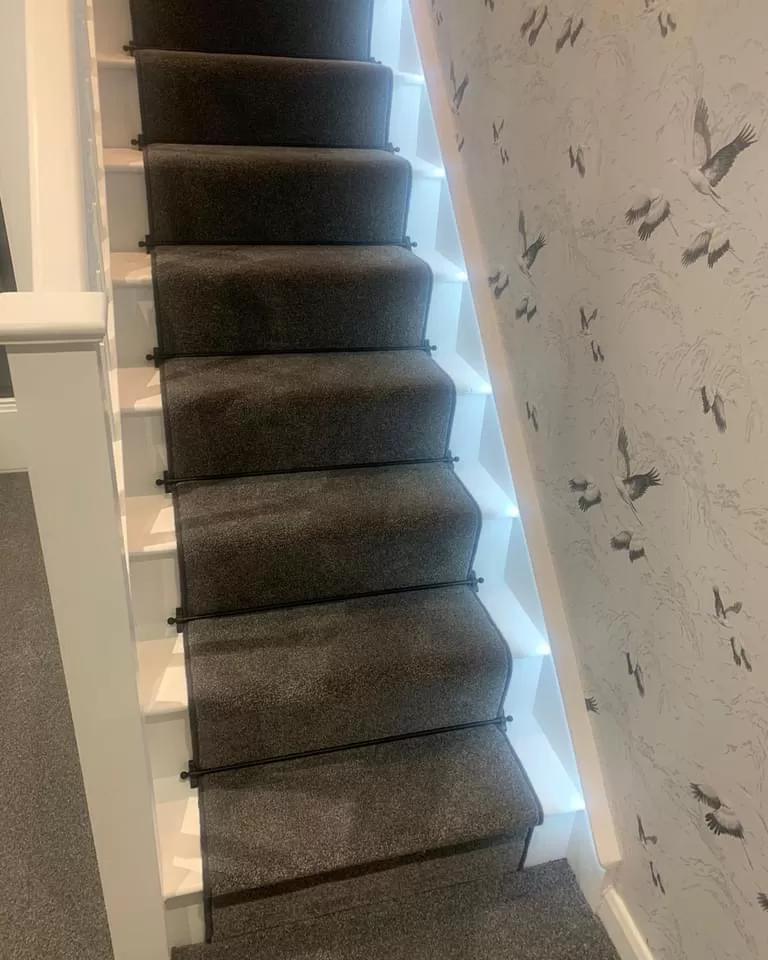
Expensive-looking homes often succeed because seemingly minor details have been handled carefully. Curtains reach an appropriate length, artwork hangs at a sensible height, furniture is positioned according to the room rather than automatically pushed against walls, and cables are not hanging visibly beneath every device. Individually, these details attract very little attention. Collectively, they influence how finished the entire space appears.
Condition matters just as much. Clean fabrics, straight artwork, repaired scratches, healthy plants, tidy surfaces, and furniture that has been properly maintained create an impression of care. A room filled with expensive items can lose that impression quickly when everything looks neglected. Conversely, an older piece of furniture in good condition can contribute considerably more character than a new item purchased simply because a space seemed empty.
Personal objects can provide the final layer. A home often looks more sophisticated when it appears to have developed gradually rather than being furnished during one shopping trip. Older furniture, books, artwork, photographs, inherited objects, and pieces collected while traveling can coexist successfully when the surrounding room gives them enough space.
That may be the biggest reason some inexpensive homes look expensive: individual objects are not trying to prove their value. The furniture has appropriate proportions, lighting has a purpose, materials repeat naturally, surfaces have breathing room, and small details appear considered. Instead of noticing how much each item might have cost, you notice how well everything works together, and once that happens, the actual price tags become surprisingly difficult to guess.