You’ve picked the wall colour, lived with the testers for a fortnight and finally committed. Then the radiator goes back on the wall and it looks like it wandered in from another house.
A cast iron radiator is one of the few things in a room you can have coloured to order, so it deserves as much thought as the walls. Here are seven colour ideas, from radiators that disappear to ones that steal the show. Each comes with a note on the rooms and light it suits best.

Firstly, should your radiator blend in or stand out?
Decide this before you look at a single swatch. Every other choice follows from it.
Blending in tends to win in small rooms, narrow halls and anywhere the radiator fills the space under a window. It’s also the safer call when your walls are already doing the talking with a strong colour or a busy wallpaper.
Standing out makes sense when the radiator itself is worth looking at. If the sections carry decorative detail, like scrolls or florals, it’s earned the attention. Plain column designs are more flexible and work either way, so let the room decide.

7 colour ideas for a cast iron radiator
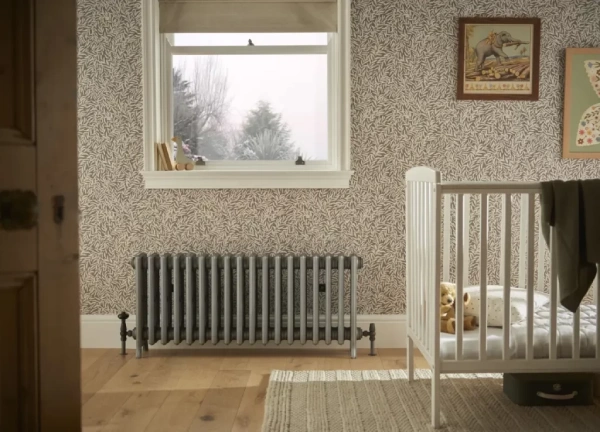
Every radiator pictured here is one of Paladin’s Cast Iron Radiators, hand-built to order in Lincolnshire. You can have them painted in Farrow & Ball or Little Greene shades, a RAL colour or a match to the paint already on your walls.
1. Colour drench it into the wall
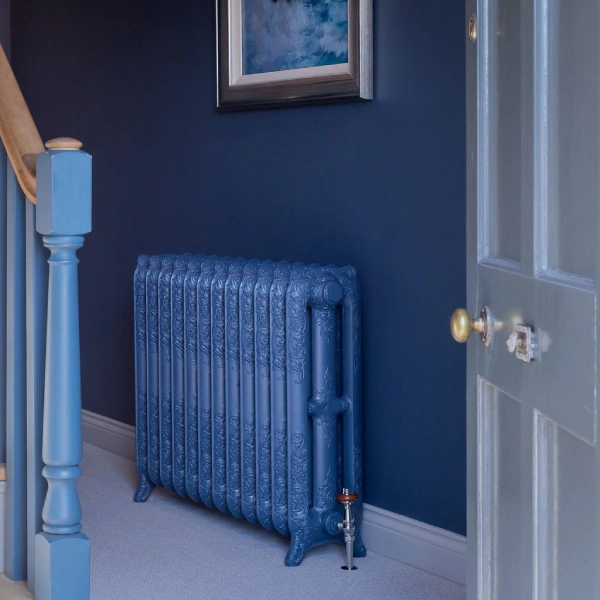
Paint the radiator, wall and skirting the same shade and the radiator almost vanishes. This is the trick for a small room where a bulky radiator under the window would otherwise eat into the space.
The detail people miss is the skirting. If the wall and radiator match but the skirting stays white, the radiator ends up looking like a block floating between two colours.
Works best in: small bedrooms, hallways and box rooms, in mid to dark shades that hide shadows between the sections.
2. Match the skirting, not the wall

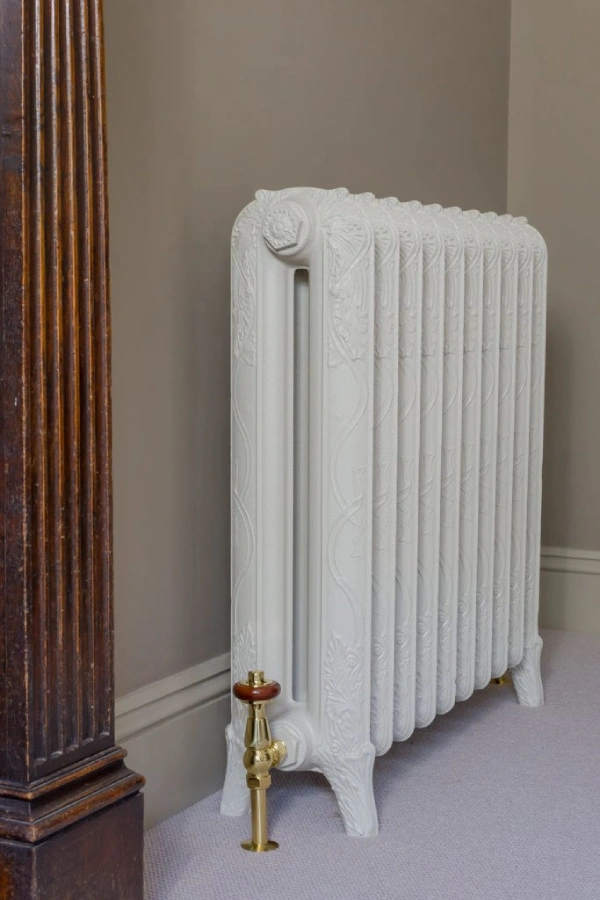
This is the more grown-up version of a colour drench. Paladin’s Clarendon, pictured here, is finished in Farrow & Ball Etruscan Red against a pale wall, with the skirting painted the same red. The radiator looks like part of the room’s woodwork, not a box stuck to the wall.
Works best in: rooms where you’ve already painted the skirting a colour, especially warm reds, ochres and greens.
3. A warm mushroom neutral
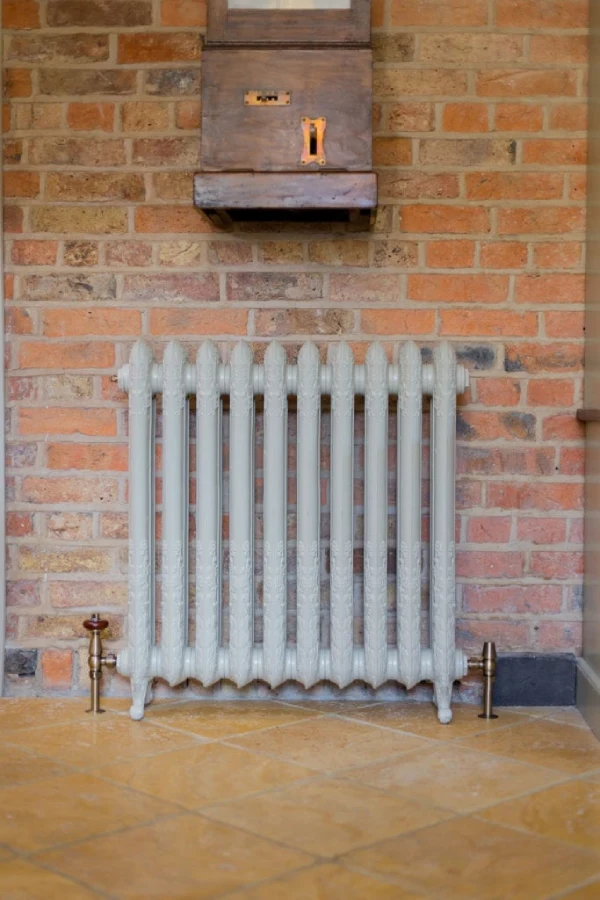
If you love a calm, neutral room, a soft grey-brown is the easiest radiator colour to live with. Paladin’s Bartholomew, pictured, is finished in Farrow & Ball Mole’s Breath, paired with brushed nickel valves. It looks lovely with creamy whites and oak floors.
Do test this one in your own light. In a north-facing room, warm grey-browns can turn flat and muddy by late afternoon.
Works best in: south and west-facing living rooms and bedrooms with cream or off-white walls.
4. Soft heritage grey with antique brass
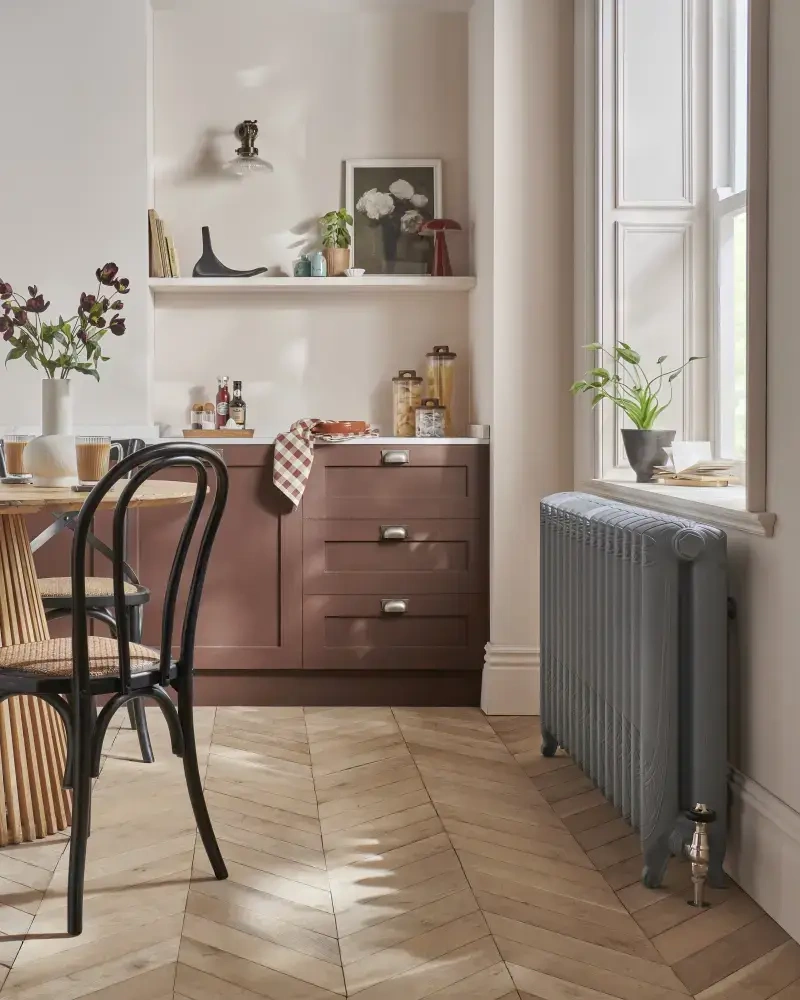
Soft grey with brass valves is a classic period pairing. Paladin’s Victoriana 4 Column, pictured, is finished in Farrow & Ball Charleston Gray with antique brass valves, set against a herringbone floor.
The brass is doing more work than you’d think here. It warms a grey that might otherwise feel cold. If you’re choosing a cooler grey, brass or copper valves will help balance it.
Works best in: hallways, dining rooms and Victorian or Edwardian living rooms.
5. Go dark and dramatic
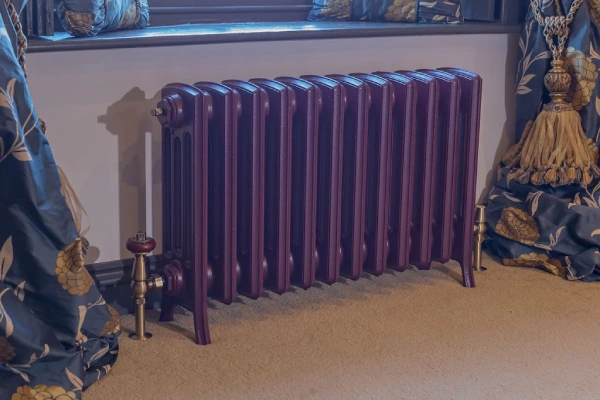
Deep navy, inky green or a soft black turns a radiator into a feature, especially against a pale wall. Dark colours also make the shape of a column radiator stand out, which suits tall designs.
Pale dust does show up more on a dark matt finish, so expect to wipe it more often in a busy hallway.
Works best in: living rooms, studies and dining rooms with plenty of natural light to balance the depth.
6. A metal finish for an industrial look
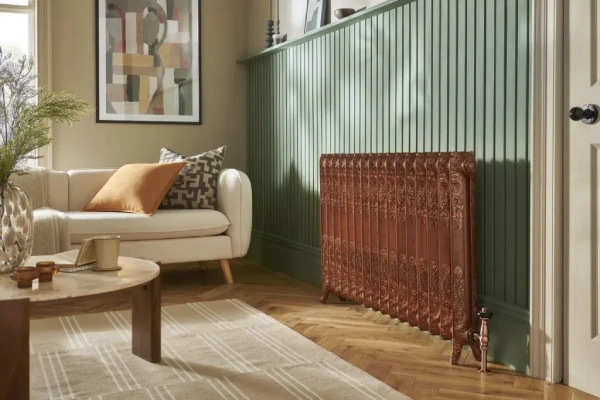
Skip paint and have the bare iron burnished or polished instead. Finishes run from raw and industrial to a full mirror shine. It’s a striking look in loft-style spaces, kitchens and bathrooms with exposed brick or concrete.
On a burnished or polished radiator, the back and internal edges are usually painted black. That’s fine against a wall. If the radiator will be seen from all sides, say in a bay or as a room divider, ask for full finishing.
Works best in: loft-style and modern rooms, and against dark or rough walls where the metal can catch the light.
7. An antiqued or highlight effect for ornate designs
If your radiator has decorative castings, a flat colour can flatten them too. A hand-finished antiqued or highlight effect picks out the raised detail, so you can see the pattern from across the room.
The exception is a plain column design. With no pattern for the effect to catch, it can look like tired paintwork rather than character, so save this one for the ornate styles.
Works best in: period rooms with original cornicing, ceiling roses and fireplaces.
Before you choose: four things people forget
Test the colour where the radiator will sit. Most radiators sit under a window, with the light behind them. Their face often reads a shade darker than your swatch on the open wall. Hold your tester card low, right under the window, and check it in the morning and again at night, because the colour you loved at noon can look quite different once the lamps go on.
Don’t forget the pipes and valves. Bare copper pipes rising out of the floor can undo a beautifully coloured radiator. Pipe sleeves slide over them and can be painted to match. For the valves, match the metal to your door handles and light switches, not the radiator. It pulls the whole room together.
Skip the wall paint. Wall paint isn’t made for a surface that heats up and cools down every day, so it tends to yellow and chip. A finish applied at the factory, before delivery, is the tougher option.
Budget per section. Finishes are priced by the section, so a long radiator in a hand-finished effect costs a lot more than a short one in a flat colour. On a tight budget, save the special finish for the radiator guests see first and keep the rest simple.
Ready to pick yours?
A radiator you’ve coloured on purpose stops being something you decorate around and starts being part of the scheme. Choose your wall colour first. Then decide if the radiator should disappear into it or answer back, and test it in the spot it’ll live.
If you’re still working out your wall colour, our colour quizzes are a good place to start. Which of these seven would you go for? Let us know in the comments!