Some of the links on this website are affiliate links. This means that if you click through and make a purchase, we may earn a small commission at no extra cost to you. Your support helps us keep Style Your Sanctuary free, allowing us to continue sharing home inspiration, decorating advice, and helpful guides. Affiliate programs we work with include Amazon Associates, Awin and Partnerize.
What happens to a timber frame after twenty years of Western Australian heat, dry seasons, and the occasional termite colony nobody noticed in time? For plenty of rural homeowners, the answer involves an expensive, disruptive repair they never saw coming. That reality is exactly why steel has become the frame of choice for a new generation of farmhouse builds.
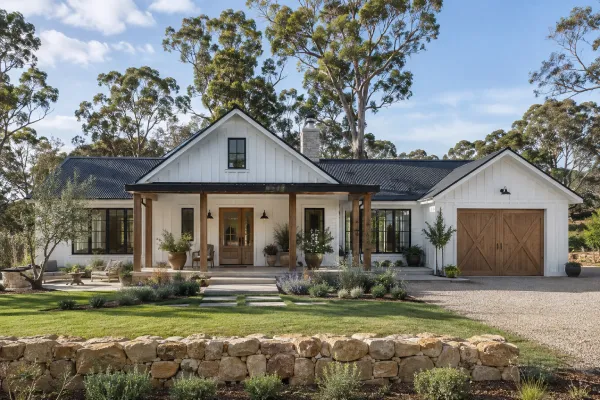
Modern farmhouses are no longer just borrowing the aesthetic of rural tradition while relying on the same building methods that struggled decades ago. Across the state, more owners are choosing steel over wood specifically because their properties demand more durability than a standard suburban build ever needed, and steel simply delivers where timber often falls short.
Here are the advantages that make steel framing a preferred choice for today’s rural homeowners:
1. Complete Resistance to Termite Damage
Termites remain one of the most persistent threats to timber-framed homes, particularly in rural areas where inspections happen less frequently. Steel contains no cellulose, meaning termites simply have nothing to feed on, removing this risk from the structure entirely.

For a farmhouse sitting on acreage far from regular pest control visits, this resistance offers genuine peace of mind. It eliminates one of the most common and costly repair issues rural homeowners eventually face with timber construction.
2. Better Performance in Bushfire-Prone Areas
Rural properties often sit in higher bushfire risk zones than suburban homes, making fire-resistant construction a genuine safety priority rather than an optional upgrade. Steel doesn’t burn, giving it a clear structural advantage in these conditions.
The CSIRO notes that steel-framed homes can be designed as part of a broader bushfire-resilient construction approach, with steel frames included in evidence-based standards developed for bushfire-prone areas.
This performance allows steel-framed homes to meet demanding Bushfire Attack Level ratings more easily than timber alternatives. For farmhouse owners in fire-prone regions, that difference can directly affect both safety and insurance considerations.
3. Dimensional Stability Across Extreme Weather
Timber naturally expands, contracts, and can warp with temperature and humidity changes, which are especially pronounced across rural Western Australia. Steel remains dimensionally stable regardless of these swings, keeping walls straight and structural elements properly aligned.
This stability matters over decades of use, not just in the first few years after construction. A steel frame avoids the slow structural drift that can eventually cause doors to stick or walls to develop subtle but persistent issues.
4. Lower Long-Term Maintenance for Remote Properties
Rural properties often sit a considerable distance from tradespeople, making routine maintenance more expensive and harder to schedule than it would be in town. Steel framing requires minimal upkeep once installed, reducing how often specialized help is needed.
This lower maintenance burden is especially valuable for farmhouse owners managing a working property, where time and attention are already stretched across many other responsibilities. Steel simply asks less of homeowners over the years that follow construction.
5. Faster Build Times With Prefabricated Components
Steel framing components are typically manufactured off-site with precise engineering specifications, allowing for faster on-site assembly than traditional timber framing methods. This efficiency can meaningfully shorten overall construction timelines.
For farmhouse builds in remote locations, where weather delays and limited local trade availability already complicate scheduling, this speed advantage offers real practical value. Getting a family into a completed home sooner matters considerably on a working property.
6. Stronger Long-Term Resale and Insurance Value
Buyers increasingly recognize the benefits of steel construction, and a home built this way can be a genuine selling point down the road. Insurance costs may also be more favorable given steel’s superior fire and termite resistance, depending on the specific insurer and location.
When calculated over the full lifespan of a home, including construction savings and reduced long-term maintenance, steel frequently proves competitive with or superior to timber despite a higher initial material cost. This long-term value is increasingly factored into farmhouse building decisions.
Working With a Builder Who Understands Rural Steel Construction
Not every builder has deep experience with the specific demands of rural steel-framed construction, from site access challenges to engineering for remote, exposed locations. Working with a team that genuinely understands these conditions makes a meaningful difference in the final result.
This expertise becomes especially important for farmhouse projects, where standard suburban building assumptions often don’t translate directly to a rural setting’s unique demands.
Based on insights from Steel Frames WA, understanding local conditions, from soil types to bushfire ratings, plays a significant role in how well a steel frame performs over the life of a rural property. Working with a team familiar with these regional specifics tends to produce a far more reliable result than a generic, one-size-fits-all approach.
Is Steel Framing Right for Every Farmhouse Project?
Steel framing offers clear advantages for many rural properties, but it isn’t automatically the right choice for every single build. Budget constraints, specific site conditions, and personal design preferences all factor into which framing material makes the most sense for a given project.
Homeowners weighing this decision benefit from discussing their specific property’s conditions with an experienced builder rather than assuming one material is universally superior. The right choice ultimately depends on matching the frame to the property’s actual demands, not simply following a general trend.
Conclusion
Steel framing is becoming an increasingly practical choice for modern farmhouse construction, especially for rural properties facing challenges such as termites, bushfire risks, harsh weather, and limited access to maintenance services. While timber remains a familiar building material, steel offers long-term advantages through durability, stability, and reduced upkeep requirements. For homeowners planning a farmhouse designed to last for decades, choosing the right framing system is about more than initial construction, it is about creating a resilient structure that continues to perform well over time.