Some of the links on this website are affiliate links. This means that if you click through and make a purchase, we may earn a small commission at no extra cost to you. Your support helps us keep Style Your Sanctuary free, allowing us to continue sharing home inspiration, decorating advice, and helpful guides. Affiliate programs we work with include Amazon Associates, Awin and Partnerize.
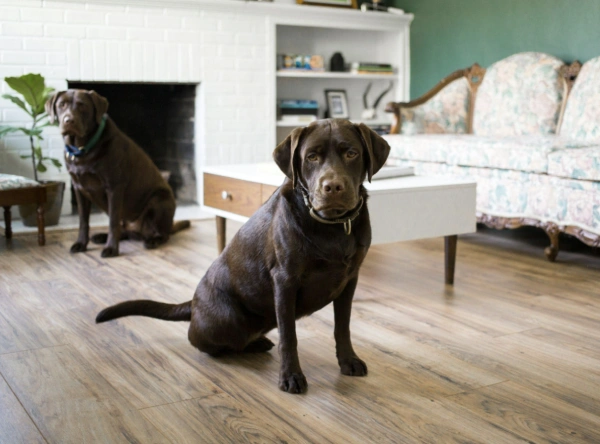
Photo by Wade Austin Ellis on Unsplash
A home can be beautifully designed and still become surprisingly difficult for an aging dog. Polished hardwood floors may become slippery, a favorite sofa may suddenly be too high to reach, and a staircase that never caused problems before can become an obstacle.
Making adjustments does not mean turning a carefully designed interior into something that resembles a veterinary clinic. Many senior-dog adaptations can be incorporated through thoughtful choices in rugs, furniture placement, storage, and materials. The objective is to make movement easier while preserving the character of the home.
Turn Practical Changes Into Part of the Design
The easiest way to preserve a cohesive interior is to stop treating accessibility features as temporary additions scattered around the house.
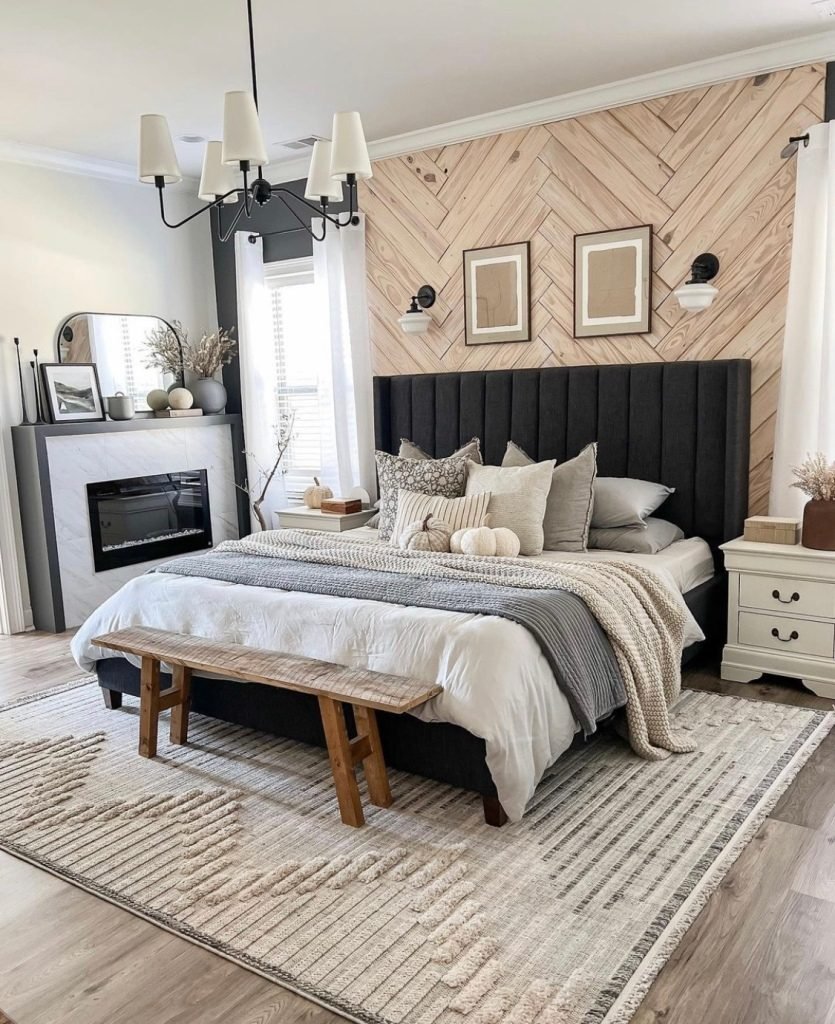
Start with the routes your dog uses every day. If hardwood or tile has become difficult to cross, strategically placed runners can provide traction while also introducing texture into the room. Choose patterns, materials, and proportions that complement existing furniture rather than buying whatever non-slip mat happens to be available.
The same thinking can apply when mobility support becomes necessary outside the home. Walkin Pets offers pre-owned dog wheelchairs, providing another route to mobility equipment for dogs that need additional support while remaining active.
Accessibility works best when it is considered deliberately rather than introduced only after every movement has become difficult.
Use Runners to Create Invisible Mobility Routes
Covering every hard floor with carpet is rarely necessary. Instead, concentrate traction where it matters.
A runner through a hallway can become part of the visual composition while providing a predictable walking route. A rug beside the bed can give a dog better footing when standing up. Another near the back door can make the transition outside more manageable.
The important detail is stability. Rugs that slide or curl at the edges can create a new obstacle, so they should sit securely against the floor.
This approach allows much of the original flooring to remain visible while creating connected areas where an older dog can move with greater confidence.
Choose Ramps That Look Like Furniture
A ramp beside a sofa or bed can appear intrusive when it looks completely unrelated to everything around it. Fortunately, function does not dictate one particular aesthetic.
Wood finishes can coordinate with existing furniture. Neutral upholstery can visually connect a ramp with a sofa. A simple built-in design may look more intentional than a temporary plastic accessory.
Placement matters just as much. If the room allows it, position a ramp alongside furniture rather than projecting it directly into a major walkway.
The practical requirements should come first: the ramp needs to be stable, appropriately sized, and provide dependable traction. Once those needs are met, its materials and appearance can be selected with the rest of the room in mind.
Reconsider Furniture Placement Before Buying More Things
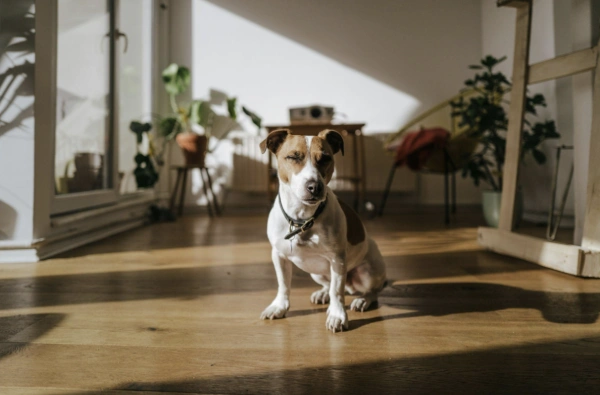
Photo by Mario Heller on Unsplash
Sometimes the most effective adaptation costs nothing.
An older dog may struggle because furniture creates tight turns or forces an awkward route between resting areas, food, water, and the door. Moving a side table or repositioning a chair can open a wider path without noticeably changing how people use the room.
Open-plan interiors can actually work particularly well for senior dogs when circulation routes remain clear.
Avoid leaving baskets, decorative objects, cables, and other small items along the dog’s main pathways. A younger animal may easily step around them, while a dog with reduced balance or vision may find the same route increasingly difficult.
A cleaner path can benefit the visual design too. Less clutter generally makes a room feel more deliberate and spacious.
Make the Dog Bed Look Like It Belongs There
Senior dogs often spend more time resting, making the bed both a comfort feature and a prominent part of the interior.
Rather than hiding it in an inconvenient corner, choose a location where the dog can rest comfortably while remaining close to household activity. A supportive bed with a low, accessible entrance can be easier to use than one requiring the dog to climb over a high edge.
From a design perspective, treat the bed as another piece of soft furnishing. Its cover can coordinate with rugs, upholstery, cushions, or other textiles already present in the room.
Washable covers are particularly practical. A beautiful dog bed loses much of its appeal if keeping it clean becomes an ongoing struggle.
Keep Food and Water Accessible Without Creating Clutter
Food stations can become more difficult to use when an older dog struggles to bend, balance, or stand comfortably on a slippery floor.
A stable mat underneath the bowls can provide traction while containing spills. Instead of a brightly colored utility mat that visually interrupts the kitchen, choose something that coordinates with the flooring or nearby cabinetry.
The location also deserves attention. Food and water should be easy to reach without requiring repeated trips up and down stairs or across difficult surfaces.
If bowls are relocated as mobility changes, consider where they can remain permanently. A planned feeding station generally looks better than bowls repeatedly moved into whichever location happens to be convenient that day.
Create One Senior-Friendly Level When Possible
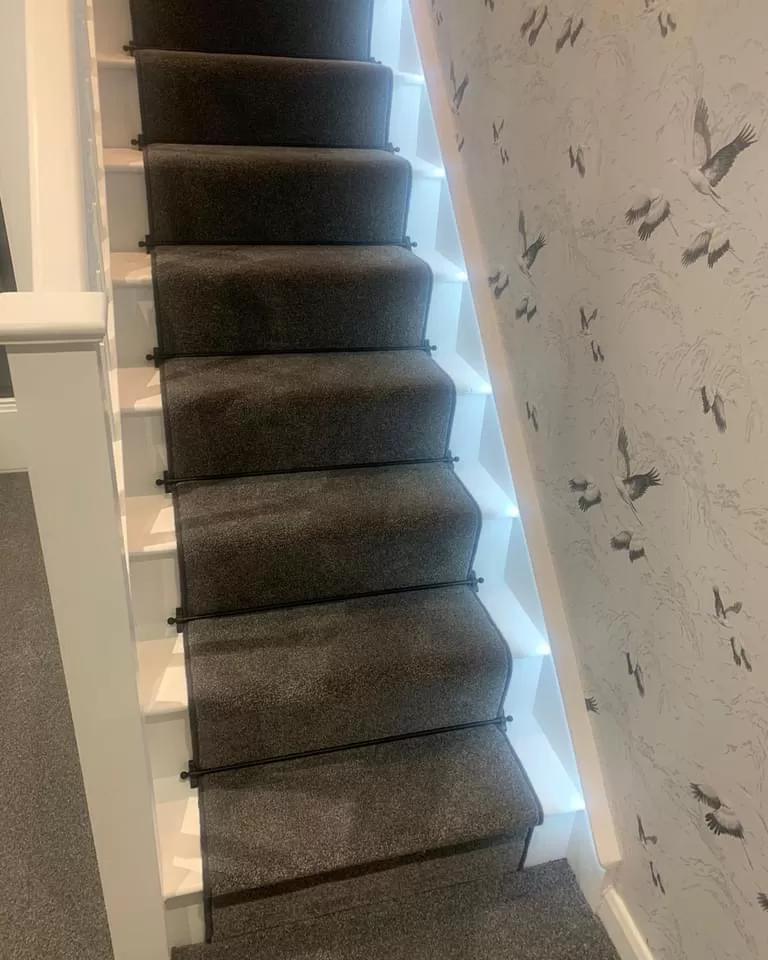
Stairs can become one of the most difficult features for an aging dog. If your home’s layout permits it, arranging the dog’s essential routine on one level can reduce the need to navigate them repeatedly.
That means placing sleeping areas, water, food, and outdoor access where they can be reached without unnecessary climbing.
Gates can restrict unsupervised stair access, and these do not necessarily need to look like temporary baby equipment. Modern gates are available in wood, metal, and minimal designs that can coordinate with railings and other architectural features.
A thoughtful solution can preserve the visual openness of the home while quietly changing how the dog moves through it.
Good Design Can Adapt Along With the Household
Interior design is already expected to respond to the people living in a home. Families add storage when children arrive, create workspaces when jobs change, and rearrange rooms as daily routines evolve. Adapting for an aging pet is simply another stage of that process.
The most successful changes do not need to announce themselves as accessibility equipment. A well-placed runner can look intentional. A ramp can coordinate with furniture. A supportive bed can become part of the room’s textile palette, while a clearer layout can actually improve the overall space.
An older dog may need the home to work differently than it did several years ago. That does not mean abandoning the style you have created. It means designing with another member of the household in mind, and allowing the interior to age gracefully alongside them.