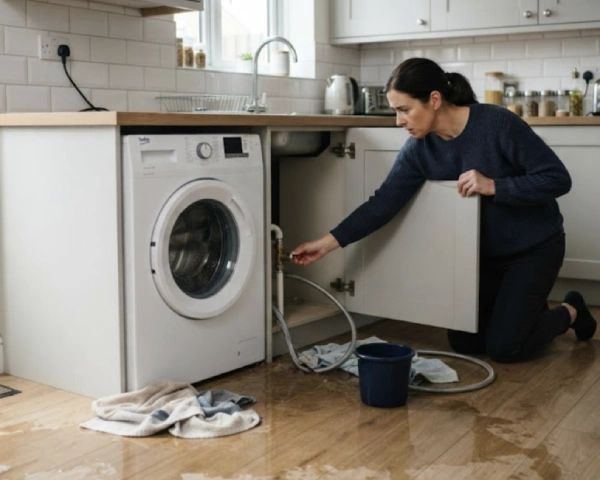
A plumbing emergency rarely happens at a convenient time. It could be a washing machine hose that breaks on a Sunday evening, a pipe that bursts behind the kitchen units, or a toilet that keeps filling instead of flushing. Within minutes, water can spread across the floor, damage the ceiling below, or get close to electrical sockets. Acting quickly can help reduce the damage.
What you do before the plumber arrives is important. It is also helpful to have the number of a trusted Kettering emergency plumber saved before you need it, instead of searching for one while dealing with a flood. This checklist explains what you can sa fely do yourself and when it is time to call a professional.
Step One: Turn Off the Water
For any leak you cannot immediately control, cutting the supply is the single most effective thing you can do.
Finding the stopcock
The internal stopcock is usually where the supply pipe enters the house: most often under the kitchen sink, but sometimes in a downstairs toilet, utility room, garage, cellar or under the stairs. If you have never seen yours, find it today. Turn it clockwise to close, using steady pressure rather than force, because an old brass stopcock can shear if wrenched. If it will not move, there is normally an outside stop tap under a small cover in the pavement or at the boundary. In terraced housing that tap may serve more than one home, so warn the neighbours first.
If you have a cold water tank in the loft, bathroom taps and the toilet will keep running until it empties, so a leak that slows rather than stops does not mean the stopcock has failed.
Isolating one appliance
Many toilets, taps, washing machines and dishwashers have a small isolation valve on their feed pipe, closed with a quarter turn of a flat screwdriver. If the problem is clearly one appliance, closing that valve leaves the rest of the house with water.
Step Two: Make the Area Safe
Water and electricity are the dangerous combination. If water is near a light fitting, socket or the consumer unit, do not touch them. If you can reach the consumer unit without stepping through water, switch off the affected circuit, or everything if you are unsure. If you cannot reach it safely, leave it and say so when you call.
If a boiler is leaking, switch it off at its controls or fused spur, but do not open the casing. If you smell gas, leave the room, avoid switches and flames, and call the National Gas Emergency Service on 0800 111 999 before anyone else.
Step Three: Limit the Damage While You Wait
Lift rugs and move furniture, boxes and anything electrical out of the wet area. If a ceiling is bulging, put a bucket underneath and keep back; do not pierce it. Towels, bowls and a tightly wrapped cloth will slow a small leak for a while, but treat that as a stopgap measured in hours. Open windows or run a fan if you can, because getting air over wet surfaces early reduces the risk of mould.
Before you mop up, photograph and video the leak, its source if visible, and anything damaged. Escape of water is one of the most common home insurance claims in the UK, and clear evidence makes the claim quicker.
When a Temporary Fix Is Reasonable, and When It Is Not
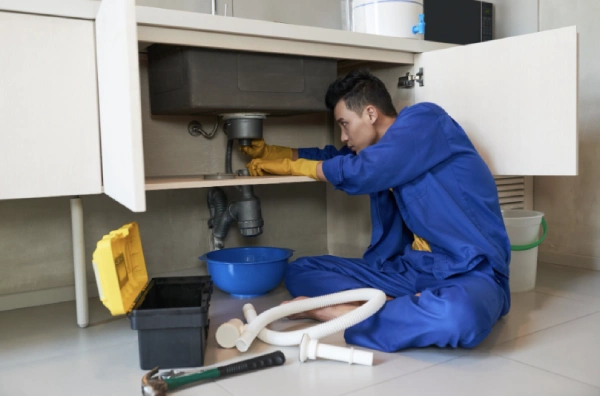
Reasonable for most homeowners: closing valves, nipping up a compression nut that has worked loose, replacing a tap washer, clearing a sink trap by hand, bleeding a radiator, plunging a toilet, or topping up boiler pressure via the filling loop where the manual explains how.
Not reasonable, whatever the videos suggest: anything on the gas side of a boiler or any gas appliance, which by law must be done by a Gas Safe registered engineer; cutting or soldering pipework; work on an unvented hot water cylinder; anything near live electrics; and chemical drain cleaners, which rarely clear a serious blockage and make the pipe hazardous for whoever has to.
The test is simple. If the fix needs a tool you would have to buy, a part you are not sure of, or a system you could not safely put back as it was, stop and call.
The Emergencies You Are Most Likely to Face
Burst or leaking pipes
Causes range from freezing to corrosion to a nail through a pipe during DIY. Warning signs include a drop in pressure, unexplained damp patches and the sound of running water when nothing is on. A burst on the mains side is under full pressure, which is why the stopcock comes first.
Frozen pipes
A frozen pipe often will not leak until it thaws. Turn off the water, open the nearest tap so meltwater has somewhere to go, and warm the pipe slowly with a hairdryer or hot water bottle. Never use a blowtorch or heat gun.
Overflowing toilets
Stop flushing. Close the cistern’s isolation valve, or lift the lid and hold the float up to stop the refill. A plunger clears most simple blockages. If the only toilet in the house will not clear, or waste is backing up into the bath, that is beyond DIY.
Severe blocked drains
Gurgling from several fixtures, water rising in the shower tray when the sink drains, or waste surfacing at an outside gully all point to a blockage in the main run. Stop using water and call a plumber or drainage specialist. If it appears to be in a shared sewer beyond your boundary, your water company may be responsible.
Boiler and heating leaks
A boiler dripping from the casing, losing pressure repeatedly or banging loudly needs switching off and a Gas Safe registered engineer. A weeping radiator valve is less dramatic but can soak a floor for weeks, so close both valves on that radiator and get it looked at.
Loss of water
Check whether neighbours are affected and look at your water company’s website for reported incidents before assuming the fault is yours. If it is only you and the weather is cold, suspect a frozen section in a loft, garage or outside wall.
Common Mistakes to Avoid
Hunting for the stopcock for the first time while water is pouring. Forcing a seized stopcock until it snaps. Piercing a bulging ceiling. Touching wet electrics or wading through water to reach the consumer unit. Running a boiler that is leaking. Pouring drain cleaner into a backed-up toilet. Mopping up before taking photographs. Agreeing to large follow-on work on the doorstep without a written price. And taking on gas, electrical or pressurised-system work because a video made it look easy.
The Checklist
Save this somewhere you can find it in a hurry.
- Stop and look: where is the water coming from, and is it clean supply water or waste?
- Turn off the internal stopcock (clockwise). If it will not move, use the outside stop tap.
- Close the isolation valve on the affected appliance if there is one.
- Switch off the affected electrical circuit if you can reach the consumer unit safely. Never touch wet electrics.
- Switch off a leaking boiler at its controls. Do not open the casing.
- If you smell gas, leave the area and call 0800 111 999.
- Move belongings, rugs and electricals out of the wet area.
- Put buckets under drips and bulging ceilings. Do not pierce the ceiling.
- Photograph and video everything before cleaning up.
- Call a qualified plumber or heating engineer if the leak cannot be stopped, waste is entering the home, the boiler is involved, or the problem is beyond the simple fixes above.
- If you rent, tell your landlord or letting agent as soon as the property is safe.
- Call your insurer’s claims line once the emergency is under control.
Preparing for Next Time
Show everyone in the household where the stopcock is and check it turns freely once or twice a year. Anglian Water, which supplies much of Northamptonshire, suggests opening it fully and then turning it back a quarter turn so it does not seize. Have the boiler serviced annually by a Gas Safe registered engineer and treat new noises or repeated pressure loss as early warnings. Before winter, lag exposed pipes in the loft, garage and outbuildings, and insulate the boiler’s condensate pipe if it runs outside, since a frozen condensate pipe is one of the most common causes of winter breakdowns. Look under sinks and behind appliances every few months for damp or staining.
Finally, choose your plumber before you need one. Check that any firm you shortlist holds the right credentials for the work (Gas Safe registration for anything gas-related, verifiable on the Gas Safe Register website), carries public liability insurance, and will confirm prices before starting. Save the number next to your insurer’s claims line. The worst time to choose a tradesperson is at midnight with water on the floor; the best time is now.