A gaming space doesn’t have to be filled with flashing lights, oversized furniture, or expensive equipment. With thoughtful planning, even a small corner of your home can become an attractive and comfortable place to enjoy your favourite games.
The secret is balancing interior design with everyday practicality. Your gaming area should reflect your personal style while blending naturally with the rest of your home.
Whether you’re decorating a spare bedroom, updating your home office, or creating a multifunctional entertainment corner, the right furniture, lighting, colours, and storage can make a noticeable difference.
Choose the Right Location for Your Gaming Space
Before purchasing furniture or decorations, consider where your gaming setup will work best.
A dedicated room offers flexibility, but a bedroom corner, living room alcove, or shared home office can be equally practical.
Make the Most of Available Space
Start by measuring the area and identifying where essential furniture can fit without blocking walkways or windows.
A compact desk works well against a wall, while a corner desk can make use of otherwise awkward spaces. Wall-mounted shelves are also useful when floor space is limited.
Think about how the area will look when it isn’t being used for gaming. Choosing furniture that complements your existing décor helps create a cohesive interior.
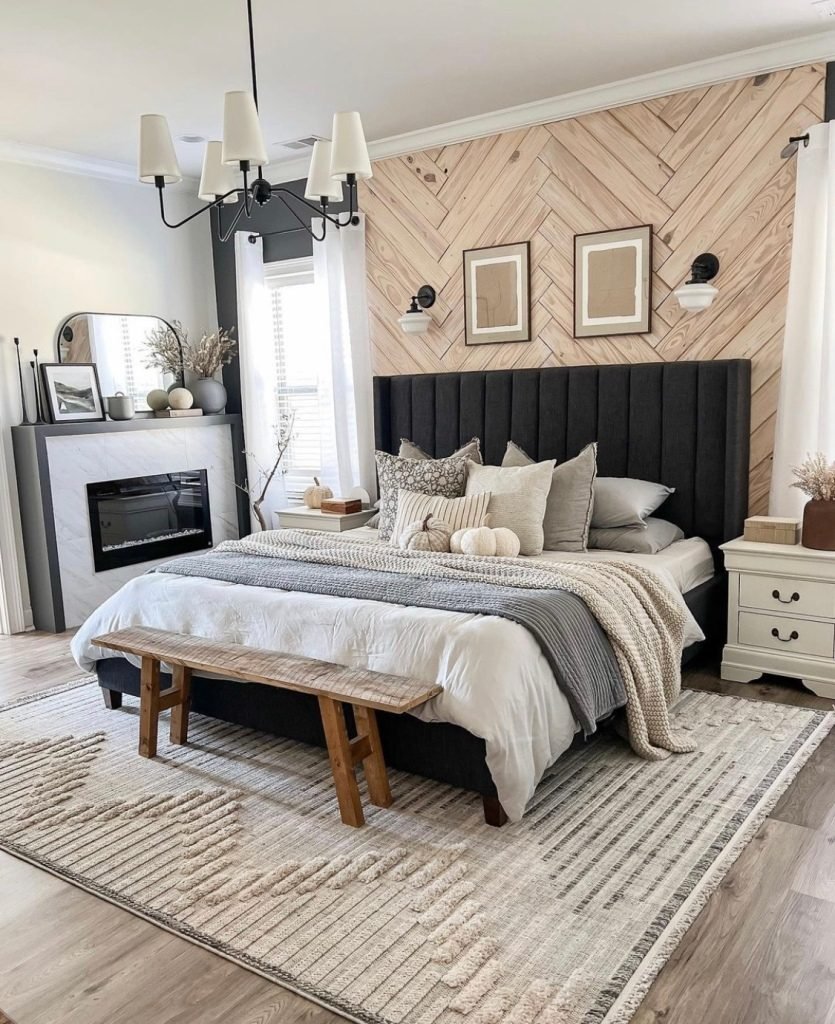
For example, a wooden desk with black metal legs suits contemporary rooms, while white furniture and natural textures work beautifully in Scandinavian-inspired spaces.
Select Furniture That Combines Comfort and Style
Furniture plays an important role in creating a comfortable gaming environment.
Your desk and chair should look attractive while supporting everyday activities, especially if you spend several hours at your computer.
Choose a Comfortable Chair
You don’t necessarily need a brightly coloured gaming chair. Many ergonomic office chairs offer adjustable features while maintaining a subtle appearance.
Look for adjustable height, supportive seating, and a design that allows you to sit comfortably.
Neutral upholstery in beige, grey, or charcoal creates a sophisticated appearance. Alternatively, muted green or blue can introduce colour without overwhelming the room.
Find a Practical Desk
Your desk should accommodate essential equipment while leaving enough room for comfortable movement.
Choose a model with drawers or built-in storage to keep smaller accessories organised.
If space is limited, consider a narrow desk with floating shelves above it. Keeping the surface relatively clear helps the room feel more spacious.
Create a Colour Scheme That Matches Your Interior
Colour influences the overall appearance and atmosphere of a room.
Rather than treating your gaming corner as a completely separate environment, choose a palette that connects it with your existing interior.
Combine Neutral Shades With Accent Colours
Warm white, beige, soft grey, and taupe provide versatile backgrounds for modern gaming spaces.
These shades pair naturally with wooden furniture, black accessories, and textured fabrics.
For a warmer atmosphere, consider olive green, terracotta, or muted brown. Darker colours, including navy and charcoal, can create a cosy appearance when balanced with appropriate lighting.
A simple combination might include cream walls, an oak desk, and sage green accessories.
Repeating these colours through cushions, artwork, or storage accessories helps create a coordinated look without requiring major renovations.
Use Lighting to Create a Comfortable Atmosphere
Good lighting can transform an ordinary desk into an inviting entertainment area.
The key is combining practical illumination with softer decorative lighting.
Layer Different Light Sources
Instead of relying entirely on ceiling lighting, consider combining a desk lamp, floor lamp, and subtle background lighting.
A desk lamp provides focused illumination, while a nearby floor lamp creates a warmer atmosphere.
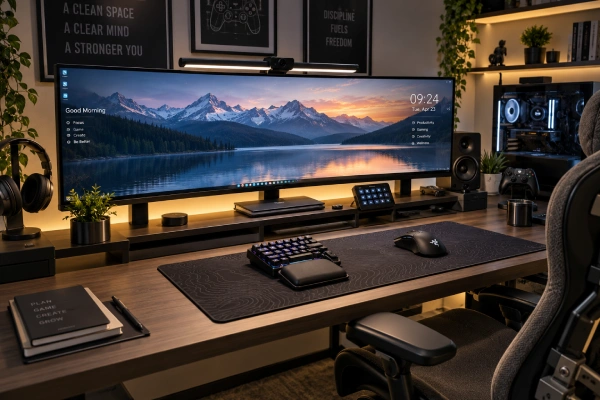
LED strips behind a monitor can add gentle background lighting without dominating the room.
Natural light is equally valuable. Position your desk where daylight is available without creating distracting reflections on the screen.
Curtains or adjustable blinds can help control brightness throughout the day.
Design a Space for Gaming and Everyday Activities
Many households use the same room for working, studying, relaxing, and gaming.
Creating a flexible layout allows the space to accommodate different activities without feeling overcrowded or overly specialised.
Make Comfort Part of the Design
A multifunctional room should remain comfortable regardless of how you use it.
For example, someone who enjoys online games may occasionally spend longer periods at their desk, particularly when participating in group activities or using services such as a wow forever raid carry. A supportive chair, appropriate lighting, and an organised workspace can make these sessions more comfortable without changing the room’s overall appearance.
Choose adjustable furniture, position the screen at a comfortable height, and keep frequently used accessories within reach.
These practical improvements also benefit remote work, studying, and everyday computer use.
The goal is to create an attractive space that adapts naturally to different routines.
Add Personality Through Thoughtful Decoration
Your gaming area should reflect your interests without overwhelming the surrounding interior.
Rather than filling every surface with decorative accessories, select a few meaningful pieces that complement your chosen colour scheme.
Incorporate Artwork and Natural Elements
Framed prints, minimalist posters, or artwork inspired by your favourite games can introduce personality.
Floating shelves provide space for books, small plants, and decorative objects.
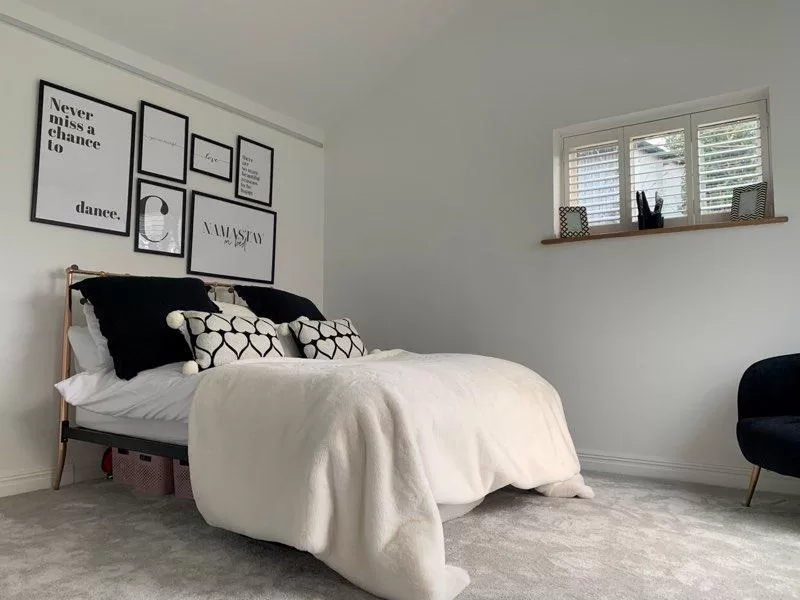
A gallery wall with coordinated frames can also make the desk area feel intentional and visually balanced.
For a softer appearance, introduce textured curtains, a small rug, or comfortable cushions.
Houseplants can add a natural touch, particularly when positioned on nearby shelves or windowsills with suitable light.
Keep Cables and Accessories Organised
A beautifully decorated space can quickly feel cluttered when cables, chargers, and accessories cover the desk.
Simple organisation solutions help maintain a tidy appearance.
Use Practical Storage Solutions
Cable trays beneath the desk, reusable cable ties, and discreet storage boxes can keep unnecessary wires out of sight.
A monitor stand with built-in storage provides additional space for smaller accessories.
Consider keeping headphones, controllers, and charging equipment in designated locations.
Avoid overcrowding shelves or filling every drawer. Accessible storage makes it easier to maintain an organised space throughout the week.
Conclusion
Creating a stylish gaming space at home is about combining comfort, functionality, and personal style.
Start with suitable furniture, establish a coordinated colour scheme, introduce layered lighting, and keep the area organised. Add a few decorative pieces that reflect your interests while complementing the surrounding interior.
With thoughtful choices, even a small gaming corner can become an attractive, comfortable, and multifunctional part of your home.