
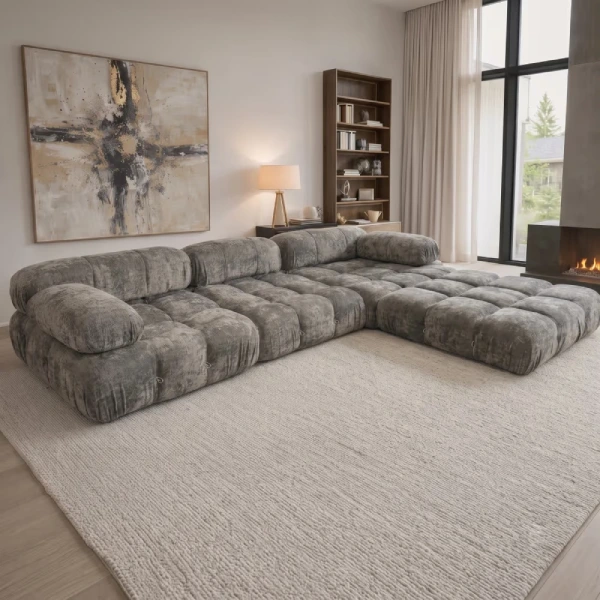
A sofa doesn’t have to be tall or bulky to become the centrepiece of a living room. Low-profile designs bring seating closer to the floor, often with deep cushions and a relaxed shape.

They’re appealing if you like modern interiors, but styling them takes a little thought. A coffee table that’s too high can look awkward, while large furniture nearby may overwhelm the sofa.
Here’s how to build a comfortable, balanced room around one.
Start With the Sofa’s Actual Size
Low doesn’t always mean small. Some sofas sit close to the floor but have generous seats that extend further into the room than expected.

Before arranging anything, measure the sofa’s width, depth and height. Then mark its footprint on the floor with masking tape. Check whether doors open fully and whether there’s enough room to walk past.
Think about how you sit, too. Deep seating is lovely for stretching out, but a lower seat may be less convenient for anyone who finds standing up difficult.
Choose a Coffee Table That Suits the Seat Height
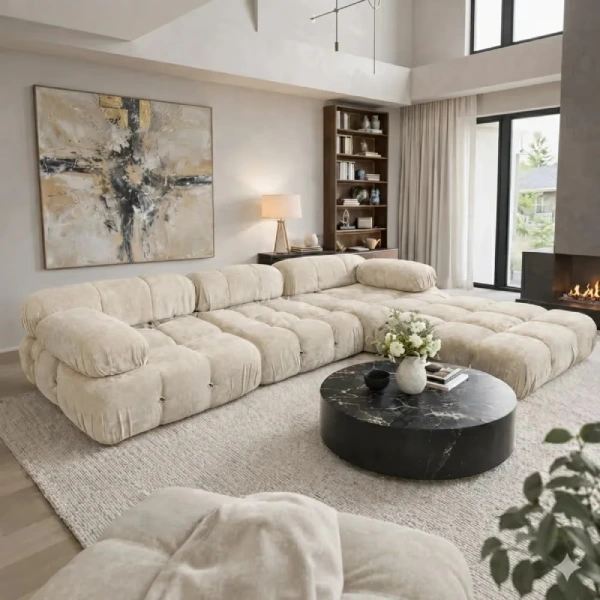
A low sofa can look out of proportion beside a tall coffee table. Look for a table roughly level with the seat cushions, or slightly lower, depending on how you’ll use it.
A round or oval table softens a room filled with straight lines. A simple rectangular table works just as well, particularly if you want a little more surface space.
Try leaving around 40–45cm between the sofa and table as a starting point. You should be able to reach your drink without squeezing through a narrow gap.
Give the Seating Area a Clear Shape
A rug can help a low sofa look grounded rather than lost in the room.
Choose one wide enough to extend beneath the front of the sofa, where possible. If you’re adding an armchair, consider whether its front legs can sit on the same rug. That small detail helps separate the seating area from the rest of the room.
Rectangular rugs work with most layouts. An oval rug can add contrast if the sofa and tables are quite boxy.
Before buying, lay newspaper or masking tape on the floor to test the rug’s dimensions.
Mix Soft Furniture with More Structured Pieces
One of the attractions of low-profile seating is its relaxed appearance. But if every item is equally soft and rounded, the room may lack definition.
Balance a generously cushioned sofa with a slim sideboard, a wooden coffee table or simple shelving.
For example, a cream sofa with plump cushions could sit alongside an oak table, a black metal floor lamp and a neatly framed print. Each piece brings a different shape without making the room busy.
There’s no need to match every finish. Repeating one wood tone or metal colour in two places is often enough.
Let Boneless Couches Work with the Layout
Boneless couches are worth considering if you prefer a cushioned, informal seating style. They generally use foam-based construction rather than a conventional rigid sofa frame, but their shapes and features vary between models.
Some have separate modular sections, while others come as a single sofa. Don’t assume every design can be rearranged or that every model is suitable for a small room.
Check the complete measurements, not just the seat height. A deep boneless couch may need a smaller coffee table or more space in front of it.
The best choice is one that suits how you actually use the room, whether that’s watching television, reading or spending time with family.
Use Colour to Create Balance
Low sofas often have a broad, horizontal shape. Colour can help that shape sit comfortably within the room.
For a cream or beige sofa, try warm white walls, light oak furniture and accents of olive green or terracotta.
A grey sofa can work with muted blue, soft green and warm wood. If your sofa is a stronger colour, such as blue, keep the largest surrounding surfaces simpler so it has room to stand out.
Pick two or three colours and repeat them in small details. Cushions, artwork and a rug can tie the scheme together without everything looking identical.
Add Texture Without Piling on Cushions
Deep, soft seating already provides a lot of visual texture. You don’t need to cover it with accessories.
Try one throw over the arm and two or three cushions in different fabrics. A woven rug, linen-look curtains or a wooden side table can add warmth elsewhere.
Leave enough of the sofa visible to appreciate its shape. More cushions aren’t always more comfortable, especially when you have to move them before sitting down.
Keep Lighting at a Comfortable Level
A floor lamp beside the sofa is useful for reading and helps define the seating area in the evening.
If the sofa has a low back, avoid placing a large lamp where it blocks a window or dominates the wall behind it. A slim floor lamp or a table lamp on a nearby cabinet may fit better.
Warm-white bulbs can make the room more welcoming after dark. Use a mix of ceiling and smaller lamps so you can choose how much light you need.
Make Sure There’s Space to Move
A beautiful layout still needs to work on an ordinary Tuesday evening.
According to ArchDaily, leaving around 90cm of space along frequently used walkways can make moving around a living room easier. This is a useful guideline, although the best arrangement will depend on your room’s size and layout.
Check the route from the doorway to the sofa, and make sure people can get up without bumping into a table. If the room is narrow, nesting tables or a compact side table might work better than one large coffee table.
Don’t be afraid to shift the sofa away from the centre of the wall if that creates a more practical arrangement.
Finish With a Few Personal Details
A low-profile sofa can look striking in a carefully styled photograph, but your living room needs to suit everyday life.
Add a favourite print, a plant suited to the light in the room or a basket for throws. Keep everyday items such as chargers and remote controls within easy reach, but give them somewhere to go when they’re not being used.
The aim isn’t to create a showroom. It’s to have a room that’s comfortable, easy to use and pleasing to look at.
Start with the sofa’s proportions, then choose the pieces around it with care. Often, a little space and a few well-chosen details do more than another piece of furniture.
