
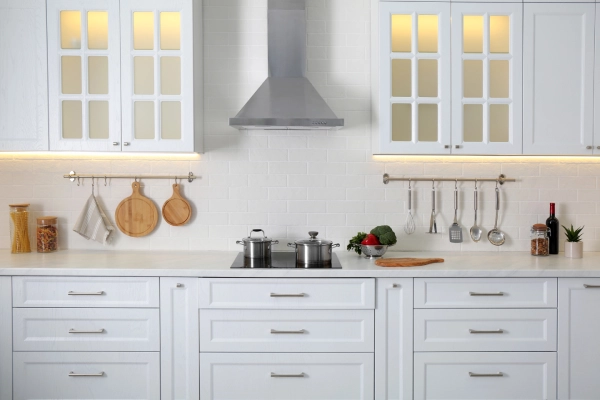
Cook from scratch most evenings and that wall behind your hob will take a hammering you probably don’t notice until it’s already too late. Grease and steam land on the same patch of wall night after night, and within a few months the signs become hard to ignore. Paint turns yellow, matt finishes soak up oil that won’t come off no matter how hard you scrub, and moisture from boiling pans creeps into hairline cracks without a single visible warning.

For families who have to cook at home because of dietary requirements or allergies, that wall cops even more punishment than most, which makes choosing the right surface behind your cooker a decision worth getting right the first time round.
What Daily Cooking Does to Your Walls
Most kitchen walls get a coat of washable emulsion, and for the majority of the room that does the job just fine. The 30cm directly behind and beside your hob, though, lives in completely different conditions to the rest of the kitchen. Grease from frying floats through the air, settles on the painted surface, and over time bonds to it in a sticky film that slowly yellows. Matt and eggshell finishes are the worst offenders here because they’re porous enough to let oil soak right into the paint itself, making it almost impossible to clean properly.
Steam is the bit most people overlook. Every pan of pasta or simmering sauce sends moisture straight at the wall, where it runs down into seams, edges and tiny cracks in the plaster. Over months, this loosens paint, causes bubbling, and can even encourage mould in spots that are completely out of sight. Pull a freestanding cooker away from the wall sometime and have a look at what’s been going on back there, because the result will probably surprise you.

How Different Wall Surfaces Compare
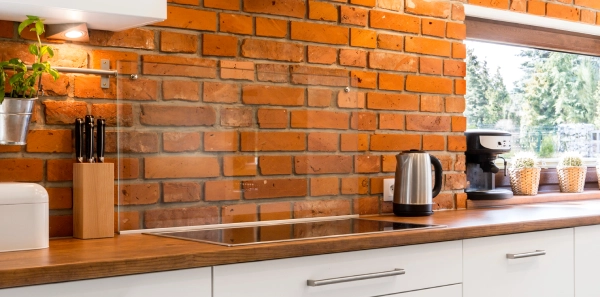
Glass splashbacks are a popular choice and they genuinely do work well. They’re completely non-porous, dead easy to wipe clean, and they can handle the heat from any type of hob without a problem. On the downside, they’re expensive, they usually need to be cut to size and fitted by a professional, and if a panel gets damaged then replacing it won’t be cheap either.
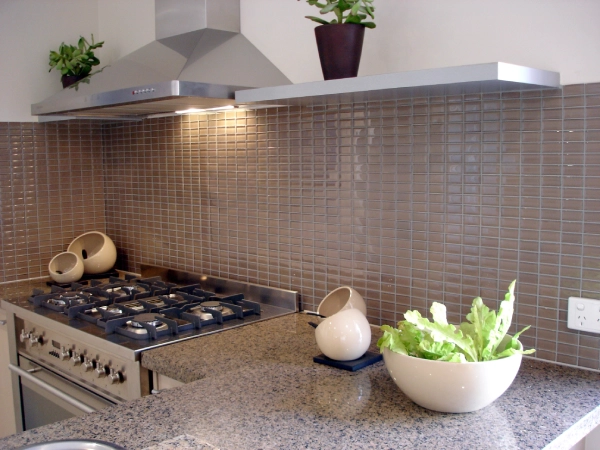

Tiles have been the go-to option for decades and they’ll cope with heat and moisture without breaking a sweat. The grout lines, though, are the weak point in the whole setup. Grout absorbs grease and moisture over time, and once it stains or goes mouldy then cleaning it becomes a real chore that eats up your weekend. Regrouting is always an option, but it’s fiddly work and most people put it off for years before they actually get around to it.
PVC wall cladding panels from Simply Cladding have a perfectly smooth, wipe-clean surface with no grout lines at all, which makes them a solid option for busy family kitchens where low maintenance matters more than high-end aesthetics. They come in a range of colours and finishes, and most of them can be fitted as a DIY project without specialist tools. One thing to keep in mind, though, is that PVC panels are best suited to electric and induction hobs, and shouldn’t be placed directly behind a gas hob because of the open flame and the heat it throws out.
The Wall You Don’t Think About Until It’s Too Late
Worktops, cabinet colours, flooring: these are the things that get all the attention during a kitchen project, but that one small section of wall behind the hob takes more punishment than all of them combined. The right choice will come down to what type of hob you’ve got, what the budget looks like, and how much time you’re willing to spend wiping things down every week. For families cooking daily, especially those preparing separate meals around allergies or intolerances, a surface that cleans in seconds and doesn’t let grease or mould build up will make a noticeable difference to how the kitchen holds up over time.
If you’re planning a kitchen refresh or even just swapping out an old splashback, take a proper look at the wall behind your cooker before you do anything else. What’s hiding back there might change your priorities completely.

