
Some of the links on this website are affiliate links. This means that if you click through and make a purchase, we may earn a small commission at no extra cost to you. Your support helps us keep Style Your Sanctuary free, allowing us to continue sharing home inspiration, decorating advice, and helpful guides. Affiliate programs we work with include Amazon Associates, Awin and Partnerize.
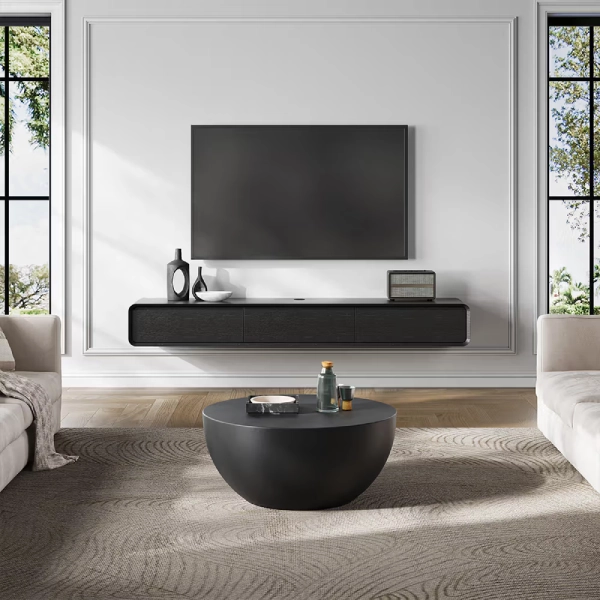
A floating TV console mounts to the wall and leaves the floor open beneath it, which is a small change that makes a room feel larger the moment you walk in. The screen gains a clean base and the space below stays clear for a basket or a lamp. When you shop for modern floating tv console, the appeal is a piece that holds the gear while the floor stays free and the room reads as calm.

Wall mounted consoles suit modern homes because they remove the bulky case that boxes a TV into a tower. The right one hides the cords, holds the devices, and keeps the wall feeling open, which is the whole point of a designed living room that does not shout about its
Why float the console
A floating console lifts the media setup off the floor, which opens the sightline and makes a small room feel bigger than its square footage. The cleared floor is easier to clean and lets a basket or a plant sit below without crowding the wall. By raising the case, you also keep cords and devices away from the reach of a toddler or a curious pet. The look is lighter and more modern than a floor standing unit that boxes the screen into a block. If your room is tight or you want the airy feel, a wall mounted piece does more for the space than a bigger sofa ever could, and the openness reads as calm rather than as a setup waiting to be tidied.
Wall and weight checks
Before you buy, confirm the wall can carry the load, because drywall alone will not hold a heavy console full of gear. Find the studs or use a French cleat rated for the weight, and anchor into them so the piece stays put through years of use. Brick and concrete are easy with the right anchors; plaster needs care to avoid cracks. A wobble now becomes a risk later, so spend the time on the mount, not the finish. Match the console weight to the wall type, and if the wall is weak, choose a lighter unit or a floor stand instead. The install is most of the job, and a solid mount is what keeps the screen and the storage safe above the floor you walk on.
Storage without the bulk
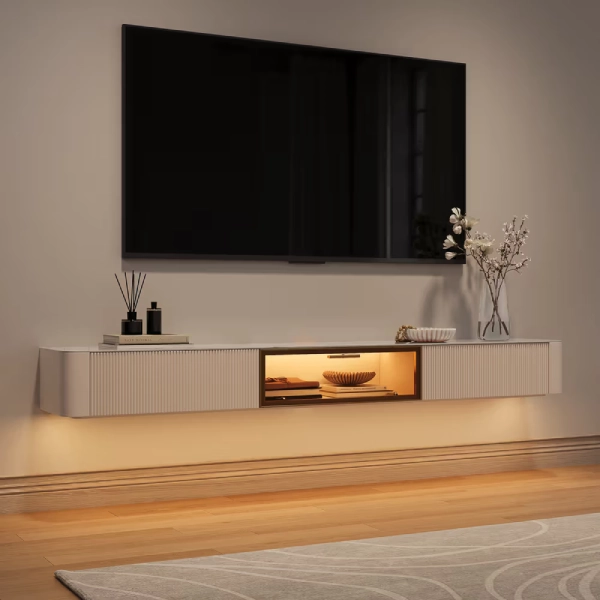
Floating consoles often use a mix of open cubbies and doors to hide the gear while showing a few books or a speaker. Pick a layout that fits your devices: a center shelf for a console, side spaces for the things you reach for. Cable channels in the back keep cords off the wall and out of sight, which is the detail that makes the float read as clean. The goal is a front that looks like furniture and a back that behaves like a rack, without showing either to the room. Choose doors for the clutter and open space for the few items worth seeing, so the wall stays calm when the TV is dark and the room is meant for talking rather than watching.
Size to the screen
A floating console should be at least as wide as the TV, and a few inches wider reads as more balanced and more secure on the wall. Too narrow and the screen looks like it could topple at a touch; too wide and the piece dominates the wall and wastes the floor below. Match the height to your seating eye line so the center of the screen sits near your gaze when you lean back, because comfort is a measurement, not a hope. For a 55 inch screen, look at consoles from 59 to 70 inches; for a 65 inch, push toward 70. Leave a few inches of clearance on each side so the piece breathes and the wall does not feel crowded by the electronics it was meant to
Finish that fits the room
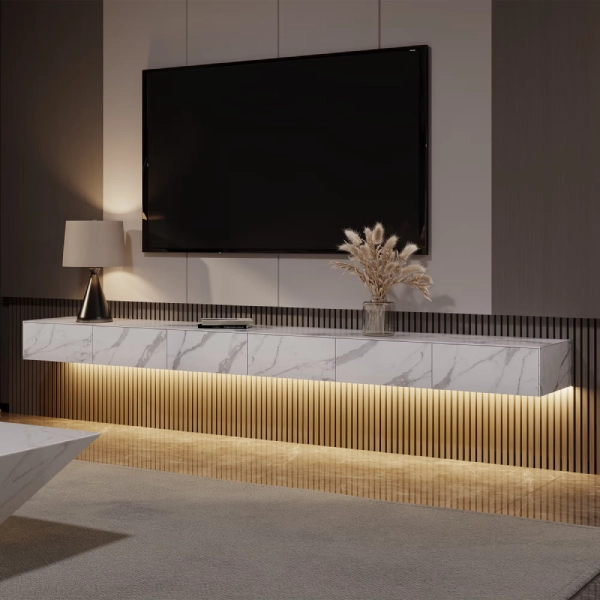
Matte white, soft grey, and warm wood are the safe modern finishes for a wall unit that should disappear into the room. A white console brightens a dark wall; a wood tone warms a cool one and echoes the floor you already have. Consider the floor, because a glossy console on a glossy floor doubles the shine, which can feel cold and a little sterile. Mix a matte front with a textured rug to keep the room human and soft underfoot, since the wall is one note in a larger chord. Let the console echo the floor or the wall rather than fight both, and the piece will feel chosen rather than dropped in by a list you clicked through on a phone during a commute that left no time
Keep the cords tidy
Even the best floating console fails if the cords drape like vines down the wall, so plan the routes before you mount. Use the rear channels, bundle with a tie, and route the power inside the case so nothing hangs in the open. A five minute cord plan saves a year of eye strain and the small shame of a guest spotting the mess. Label the cables before you tuck them away, because the day you add a device you will thank the past you for the clear mark on each cord. The console hides the gear; you hide the cords, and together they let the screen be the only thing you see when the room is meant to be calm and the TV is the center of the evening.
Ventilation you can trust
Electronics throw heat, and a closed console can trap it if the maker skimped on airflow, so look for an open back, side gaps, or vent slits. A hot box ages fast and fails sooner, which makes ventilation a function, not a detail you skip. If the console is fully closed, confirm the doors are vented or leave one cubby open for the main device, and place the unit a few inches from the wall so air moves behind it. The room stays safe and the gear lasts longer, which is the real return on a console chosen with the back panel in mind. A piece that breathes protects the screens and the boxes you paid for, and the calm look stays intact because nothing overheats and shuts off mid
Install once, install right
On mount day, level the piece, load the gear, and test the remote through the closed door before you walk away from the wall. A door that blocks the signal turns a clean look into a daily annoyance you feel every time you sit down to watch. Secure the console to the studs so it cannot shift, and route the cords while the back is still reachable, because reaching it later means lowering the whole setup. Ten minutes of careful install spares you the slow irritation of a piece that looks right but works wrong, and the room stays calm because the technology behind the doors actually behaves. The float only pays off when the mount is solid and the cords are gone, so do it once and do it
| Feature | What to check |
| Wall type | Stud or concrete anchor |
| Width | Equal or wider than screen |
| Cable pass | Rear channels standard |
| Ventilation | Open back or side gaps |
| Mount | Level, secured to studs |
A modern floating TV console earns its place by lifting the media setup off the floor and leaving the room open beneath it. Check the wall, size the piece to the screen, and plan the storage around your real devices. Keep the cords tidy, confirm the ventilation, and install it once with care, and the wall will read as calm whether the TV is on or dark.
