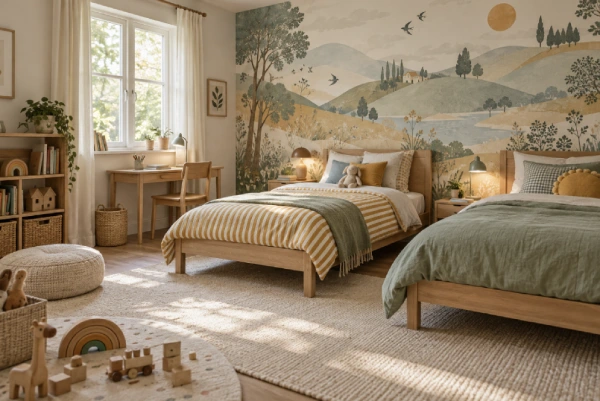
The kids wallpaper should accommodate the childs sleep time, play time, and study time as much as possible, as these activities may be taking place in the same space. Begin by identifying what items of furniture and finishes will remain in the room and then allow the children to choose a pattern that appeals to them.

Begin with preferences and shared priorities
Ask if the room should have a quiet, colorful or adventurous feel. Provide three sample suggestions instead of a full catalog. Avoid making assumptions about preferences or color choices based on gender.
Children with common interests in space and animal life could choose to use an abstract green background in a shared bedroom, showing their hobbies using accessories like bedding and artwork. The wallpaper does not have to include everything that each child enjoys.
When looking at different types of Kids Wallpaper, you should take into account the tone of your kids’ furniture. If the wallpaper has similar colors to the furniture, it creates a sense of flow and consistency. However, if the colors of the wallpaper contrast with the colors of the furniture, this will highlight the shape of the furniture. In many cases, kids’ furniture that is patterned works best with wallpaper that has a more subtle design.

Map the wall before choosing artwork
The wall behind the bed can help establish a boundary for where you sleep. A wall that faces the bed provides an opportunity to display art that will be visible while you are in bed and there are likely to be fewer things to distract your attention.
Windows and doors split up the scene, therefore repetitions may be more acceptable. First, measure the wall and then identify each opening, headboard, desk, shelf, and storage units height, width, and position. Evaluate the free space.
For a non-centered bed, place art above the bed, or in the largest area of the wall. Bunk beds have the ability to cover up a mural at multiple levels, as do high-backed beds and elevated beds. Make sure there are no important parts of the mural that will be covered by furniture, and ask for a crop view of how the mural would look if printed with the dimensions you provided.
Repeat strips may be better suited for areas where there are narrow gaps between fitted wardrobes and toy storage. Slanted walls can cut off part of a design, and alcoves require their own composition and lighting evaluation.
Match scale to the space you see
The size of your room and how much continuous wall space you have should both be considered. If you have enough of the wall visible, large, spaced out patterns can be used effectively on small walls. On the other hand, if you choose a small, dense pattern, it will probably appear more cluttered.
Small bedrooms that receive little natural light should have less dramatic contrast on the walls with the best exposure to natural light and use simple finishes for all other walls. A pale colored wallpaper will not make up for a lack of adequate lighting.
Repeat repeats as needed to accommodate changes in furniture or the presence of walls with openings. For a wall mural in a childs bedroom, there must be empty space available for the mural to be composed. Do not rely on the thumbnail size of the image to determine if the motif will fit. Instead, measure the motif.
Keep the wall hanging and open shelves from being too busy with the wallpaper pattern. There will be enough other things (such as toys and schoolwork) that create visual interest in the room.
Test colours under actual lighting
Compare your sample against existing flooring, woodwork, and all of the other “fixed” finishes in the space. Depending upon the lighting, the level of contrast between the dark wallpaper and other elements in the space, the pattern of the wallpaper itself, and the overall proportions of the space, a dark kids wallpaper can create a sense of being cozy.
In dark rooms, you will use the light from the lamps that are available to evaluate the samples. The light from a bedside lamp or desk lamp will illuminate different parts of the sample and may affect how warm it appears.
The light from screens is emitted into space, while printed materials reflect the light that hits them. Screen settings and the type of finish applied to a screen can influence how we perceive colors. When explore XWALLX wallpaper, evaluate each design in relation to your room layout, then display samples of the chosen design(s) vertically on the appropriate wall(s). Evaluate daylight and artificial light conditions in the room, particularly in areas of the room that are shaded or dark.
Connect textiles, paint and activity areas
Use your favorite pattern-based bed sheets when comparing options. For instance, an aggressive animal print on a duvet would pair well with a less intense geometric wall pattern that shares at least one color. Scale and contrast are key to allowing multiple patterns to live together successfully.
When you have detailed wallpaper in your room, it is good to use plain curtains or a simple rug so you can create some “breathing space.” You should choose the other colors for the walls of your room using either the background color of your wallpaper, or supporting colors. When choosing those additional wall colors, it is best to test them next to samples.
For example, one wall with high-impact visuals works well with heavily decorated furniture. Or multiple walls (or even every wall) could have simple patterns that are repeated throughout, or a unified design theme that creates a feeling of being surrounded.
A study area/corner (or play area) adjoining may have the same wallpaper, but as long as the colors are shared and/or the patterns are similar then those two separate activity spaces will be connected even if they do not have identical wall surface materials.
Leave flexibility for growing interests
When selecting wallpaper for childrens bedrooms, you should choose a style that will complement various types of bedding and furniture. You may use temporary theme elements with removable accessories.
Make sure to get sample confirmations and crop confirmations before placing an order. Rather than assuming that products have certain quality characteristics or are certified, refer to the manufacturers literature regarding how to clean them, what types of materials they use, adhesive options, and the proper way to install them.

Neutral Nursery with Panelling – Valspar Puppy Love
Some of the links on this website are affiliate links. This means that if you…