
Some of the links on this website are affiliate links. This means that if you click through and make a purchase, we may earn a small commission at no extra cost to you. Your support helps us keep Style Your Sanctuary free, allowing us to continue sharing home inspiration, decorating advice, and helpful guides. Affiliate programs we work with include Amazon Associates, Awin and Partnerize.
Refreshing your home does not always mean repainting every wall, replacing furniture or starting an expensive renovation. Some of the most noticeable improvements come from smaller changes that affect how a room looks, feels and works.
The best place to start is with what the space actually needs. A room may feel too dark, lack texture, have an awkward furniture layout or simply contain too many things competing for attention. A few thoughtful updates can often make a familiar space feel much more considered.
Start With the Layout and What You Already Have
Before buying anything new, take another look at your existing furniture and accessories.
Furniture placement can make a surprising difference. In a larger living room, bringing chairs and sofas closer together can create a more comfortable conversation area. In a smaller space, removing an unnecessary side table or bulky piece of furniture may improve movement around the room.
It is also worth clearing crowded surfaces and temporarily removing accessories that no longer contribute much to the space. Once the room feels less busy, it becomes easier to see what is genuinely missing.
Add Texture and Definition to the Room
Colour often gets most of the attention when decorating, but texture can have just as much impact.
Rooms dominated by smooth walls, hard flooring and simple furniture can sometimes feel flat. Introducing contrasting materials through curtains, cushions, throws and floor coverings can create more visual depth without requiring bold colours or patterns.
The floor offers a particularly large area to work with. A rug can break up an expanse of laminate, wood or tile while adding another layer of texture to the room.
Homeowners comparing different rug colours, patterns and textures can explore Rugspile UK for options suited to living rooms, bedrooms and other areas of the home.
The aim is not to make every surface highly textured. A few carefully chosen contrasts are usually more effective than filling the room with competing finishes.
Use a Rug to Define the Furniture Layout
A common problem in larger rooms is furniture that appears to float independently rather than forming one connected arrangement.
A well-positioned rug can help visually define the area.
In a living room, placing a suitably sized rug around the sofa and coffee table can help connect the main pieces of furniture. This can be particularly useful in an open-plan room, where the floor covering can distinguish a seating area from a dining or working space without adding a physical divider.
Bedrooms can benefit in a similar way. A small rug beside the bed provides a softer surface underfoot, while a larger design can help frame the bed within the wider room.
Where deeper texture suits the space, a plush shaggy rug collection provides options worth considering for bedrooms, lounges and relaxed seating areas. Before choosing one, measure the available floor space and consider door clearance, furniture placement and the main walking routes through the room.
Make Neutral Colours More Interesting
Neutral interiors do not need to look plain.
Beige, cream, warm white, taupe and soft grey can provide a calm foundation, but using exactly the same finish throughout a room can make the overall scheme feel one-dimensional.
The solution is often texture rather than another colour.
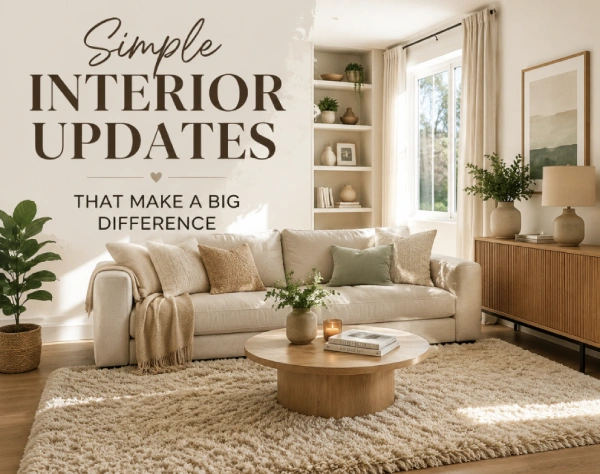
For example, a neutral living room could combine smooth upholstery, wooden furniture, woven curtains and a deeper-pile rug. The palette remains understated, but each material responds differently to light and gives the room more character.
A beige fluffy shaggy rug can work particularly well where you want to introduce a softer floor texture without adding a strong contrasting colour. Beige also sits comfortably alongside warm whites, creams, browns and many natural wood finishes.
Think about the rug as part of the complete room rather than choosing its colour in isolation. Existing flooring, furniture and natural light can all influence how a shade appears once it is in place.
Improve the Room With Light and Soft Furnishings
Once the main layout and larger surfaces feel balanced, smaller changes can improve the atmosphere without requiring major work.
Improve Lighting at Different Heights
Lighting can change the atmosphere of a room almost immediately.
Relying on one bright ceiling light may provide enough general illumination, but it does not always create the most comfortable environment. Using several light sources at different heights gives you greater control over how the room feels throughout the day.
A ceiling fitting can provide general light, a floor lamp beside a chair can support reading, and a smaller table lamp can bring softer illumination to a darker corner.
Natural light matters too. If a room feels gloomy during the day, consider whether furniture or heavy window treatments are blocking light unnecessarily.
Instead of simply adding more lamps, think about what you actually do in each area and provide the right type of lighting for that activity.
Refresh Cushions and Throws
Soft furnishings are one of the easiest things to update because they do not require permanent changes.
Rather than filling a sofa with matching cushions, try working with a limited colour palette while varying the materials. Combining smooth, woven or lightly textured finishes can add interest without making the arrangement feel overly coordinated.
A throw can have a similar effect. One placed naturally over an armchair or sofa can introduce a new texture or seasonal colour without replacing the furniture itself.
Try connecting these smaller details to colours already present elsewhere in the room. A subtle tone picked up from a rug, curtain or piece of artwork can help the interior feel more cohesive.
Create Better Visual Balance
Good interior design is not simply about adding more objects. The amount of empty space and the scale of individual pieces can make just as much difference.
Give Walls Some Breathing Space
Refreshing a room does not always mean adding something.
When every wall is occupied by artwork, shelves, mirrors or decorative objects, individual pieces can lose their impact. Leaving some areas relatively clear can make a room feel calmer and allow important features to stand out.
Scale is important here too. A very small picture above a large sofa can look disconnected, while a suitably proportioned piece or carefully arranged group can feel more intentional.
You may not need new artwork at all. Moving existing pieces, changing their arrangement or relocating a mirror can sometimes be enough to alter the balance of the room.
Pay Attention to Size and Proportion
A good design can still look wrong when its scale does not suit the room.
This applies to furniture, lighting, accessories and especially rugs.
A rug that is too small for the surrounding furniture can make a seating arrangement feel disconnected. On the other hand, a design that overwhelms the available floor area may make a compact room feel crowded.
Measure before buying rather than relying on visual estimates. For a rug, consider whether you want it positioned entirely in front of the furniture, beneath the front legs or across a larger section of the room.
Marking the proposed dimensions on the floor with removable tape can help you visualise how much space the rug will occupy before committing to a particular size.
Choose Interior Updates That Work for Everyday Life
Interior design should work beyond photographs.
A household with children or pets may place greater importance on easy-care surfaces and uncluttered walking routes. Someone working from home may benefit more from better task lighting and a clearly defined workspace. A small flat may need thoughtful furniture placement more than additional decorative accessories.
Consider how the room is actually used before deciding what to change.
This is also why copying an entire room from an inspiration image does not always produce the same result at home. Room dimensions, natural light, flooring, furniture and daily routines are different.
Take the ideas that solve your particular problem and leave the rest.
Final Thoughts
The updates that make the biggest difference are not necessarily the most expensive.
Start by reconsidering the existing layout. Then look at lighting, texture, proportion and the way different areas of the room are used. A well-sized rug can help connect furniture, layered lighting can change the evening atmosphere, and carefully chosen textiles can add warmth without requiring a complete redesign.
Most importantly, make changes with a purpose rather than adding things simply to fill empty space.
A successful interior does not need to follow every new trend. It should feel balanced, comfortable and practical for the people who use it every day.
